Why Do the US Midterm Elections Matter for Bursa Malaysia?
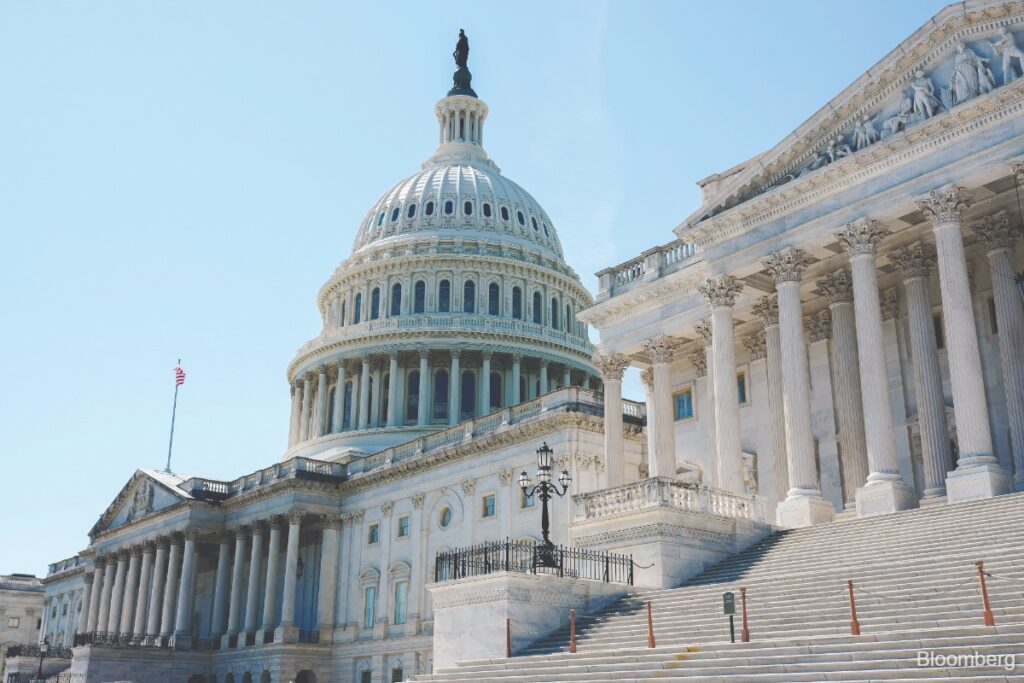
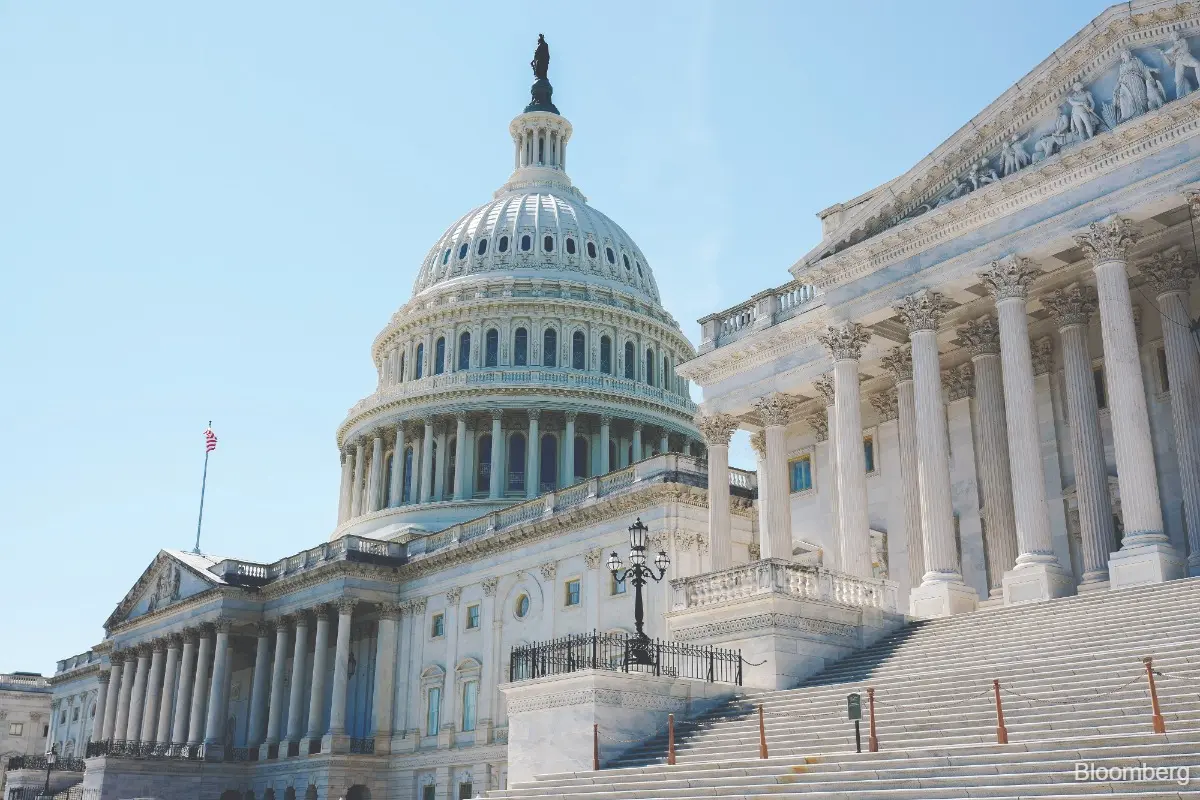
The US midterm elections take place on Nov 3, and the result decides whether Republicans keep control of both chambers of Congress. The Democrats need a net gain of four seats in each of the House of Representatives and the Senate to take control.
President Trump is polling low. A New York Times/Siena poll put his approval rating at 34%, the second lowest going into any midterm since 1946 and just above Harry Truman’s 33% that year.
A Reuters/Ipsos poll that closed on Oct 19 showed just 31%. Historically, the president’s party lost House seats in 18 of 20 midterms from 1946 to 2022, averaging a loss of about 26 seats.
At the time of writing on Oct 22, Polymarket priced a 92% probability of Democrats taking the House and 67% for the Senate. Its Democratic sweep estimate was around 65%.
Decision Desk HQ‘s forecast, cited by UOB as at Sept 28, gave Democrats a 52% chance of winning both chambers. Republicans retaining both had 23%.
What Did the S&P 500 Do After 19 Midterm Elections?
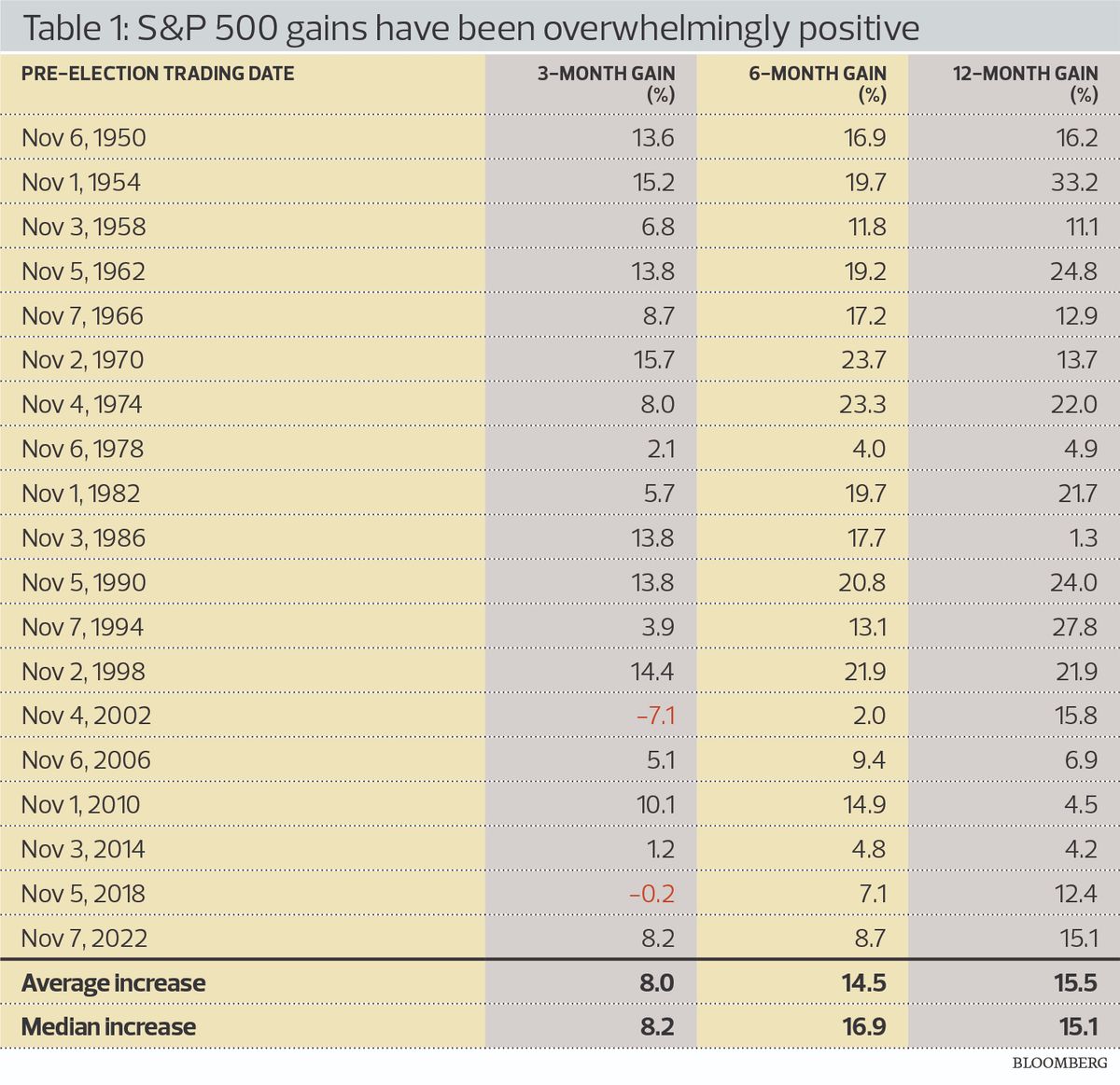
The S&P 500 recorded positive 12-month gains after all 19 midterms from 1950 to 2022, averaging about 15%. The median 12-month gain was also about 15%, so a few exceptional years do not explain the average.
Six-month gains were positive every time. Three months after two elections the index was lower, down 7% after 2002 and 0.2% after 2018.
The Edge notes the elections may not be the cause, since returns also reflect monetary policy and corporate earnings. Rising interest rates and a possibly prolonged geopolitical conflict make a repeat harder to predict.
How Has the FBM KLCI Performed After US Midterms?
The FBM KLCI averaged a 12-month gain of 13% across nine elections from 1990 to 2022, but its median was just 1%.
- 3 months: S&P 500 +5% vs FBM KLCI +7%
- 6 months: S&P 500 +11% vs FBM KLCI +12%; KLCI median -1%, positive in 4 of 9 periods
- 12 months: S&P 500 +15% vs FBM KLCI +13%; KLCI positive in 5 of 9 periods
The S&P 500 was higher after six and 12 months in all nine periods. The difference is consistency, not average returns.
Two periods lifted the Malaysian average sharply. The FBM KLCI rose 74% in the 12 months after the 1998 midterms as markets recovered from the Asian financial crisis, and 42% after 2006 amid a broader Malaysian equity rally in 2007.
Who Is Betting Against a Post-Midterm Rally?
Ian Yoong, a former investment banker and high-net-worth investor, sees downside risks for US equities as a divided government grows more likely. He also expects pushback on AI capital expenditure, which he says has driven the sector’s outperformance.
Americans for Tax Fairness counts 172 billionaire families spending more than US$1.7 billion on this year’s elections, with 113 mostly backing Republicans and 45 mostly backing Democrats. Yoong advises: “It would be best to keep your powder dry and stay on the sidelines, with 30% to 40% cash at this juncture.”
An anonymous analyst takes the opposite view. He says a divided US government would be positive for emerging markets by reining in Trump’s unilateral actions, and rates the midterm outcome four out of 10 in importance.
MBSB Investment Bank Research head Imran Yusof rates the midterms eight out of 10 but calls the impact indirect. He says the highest impact will be the Middle East conflict, and MBSB IB Research’s base case for Q4 2026 is de-escalation that eases oil prices, inflation and interest rates.
What Do Bond Yields Mean for Bursa Financial Stocks?
The 10-year US Treasury yield hit an intraday high of 5.34% on Oct 1, its highest since early 2002, before easing to around 5.04% on Oct 22.
UOB expects the yield to reach 5.5% by the end of the third quarter of 2027, with pressure from Federal Reserve rate hikes and inflation rather than the elections. Asian insurers are among the large holders of US Treasuries.
An analyst who asked not to be named says financial stocks have weakened on concerns about mark-to-market losses on bond holdings. He believes the impact will be relatively limited.
Which US Policies Stay in the White House’s Hands?
Tariffs, sanctions and foreign policy largely remain with the president, according to UOB and Bloomberg Intelligence (BI). After the US Supreme Court struck down emergency-powers tariffs in February, the administration turned to Sections 301 and 232.
BI expects tariff risk to run into 2027 regardless of Congress, leaving retailers, grocers and carmakers more exposed. Large US banks may gain if regulators finalise rule changes that could free up US$18 billion of capital across JPMorgan, Bank of America and Citigroup.
A Democratic House could constrain Trump’s US$1.5 trillion defence and military budget request for FY2027. BI expects missile defence and munitions replenishment to keep bipartisan support.
Key Takeaways
- Polymarket priced a 92% chance of Democrats taking the House as of Oct 22.
- The S&P 500 was positive 12 months after all 19 midterms from 1950 to 2022, with a median of about 15%.
- The FBM KLCI median 12-month gain was 1% across nine midterms from 1990 to 2022.
- The 10-year US Treasury yield’s 5.34% intraday high on Oct 1 may matter more than the vote, one analyst says.
- BI estimates US$18 billion of bank capital could be freed if rules are finalised.
Disclaimer: This article is for information only and is not investment advice. Figures come from The Edge Malaysia’s analysis and the research houses cited. This piece covers the FBM KLCI index, not a specific Bursa-listed company. Always do your own research before making any investment decision.
Frequently Asked Questions
Do US midterm elections affect Bursa Malaysia stocks?
The Edge’s analysts say the vote may have some bearing on Malaysian equities, but corporate earnings, bond yields and the Iran war matter more. MBSB Investment Bank Research rates the midterms eight out of 10 in importance, with an indirect impact.
Has the FBM KLCI risen after past US midterm elections?
The FBM KLCI averaged a 12-month gain of 13% across nine midterms from 1990 to 2022. Its median was only 1%, and it was higher after 12 months in five of nine periods.
How often has the S&P 500 gained after US midterm elections?
The S&P 500 posted positive 12-month gains after all 19 midterms from 1950 to 2022, averaging about 15%. It was lower three months after the 2002 and 2018 elections, down 7% and 0.2% respectively.
Source: View Original Article — The content is based on the original publisher. Refer to the original content for accurate info. Contact us for any changes.
Related Articles & Resources
Disclaimer: This article is for informational purposes only and does not constitute financial advice. Always do your own research before making investment decisions.
Want to invest in Bursa Malaysia or US markets? Contact Dexter Chia, an AI Driven Remisier who has 2,200+ clients at Malacca Securities Sdn Bhd (M+ Global). M+ Global Invitation Code: UBZQ | WhatsApp: +60169059789 | Why Choose Dexter?