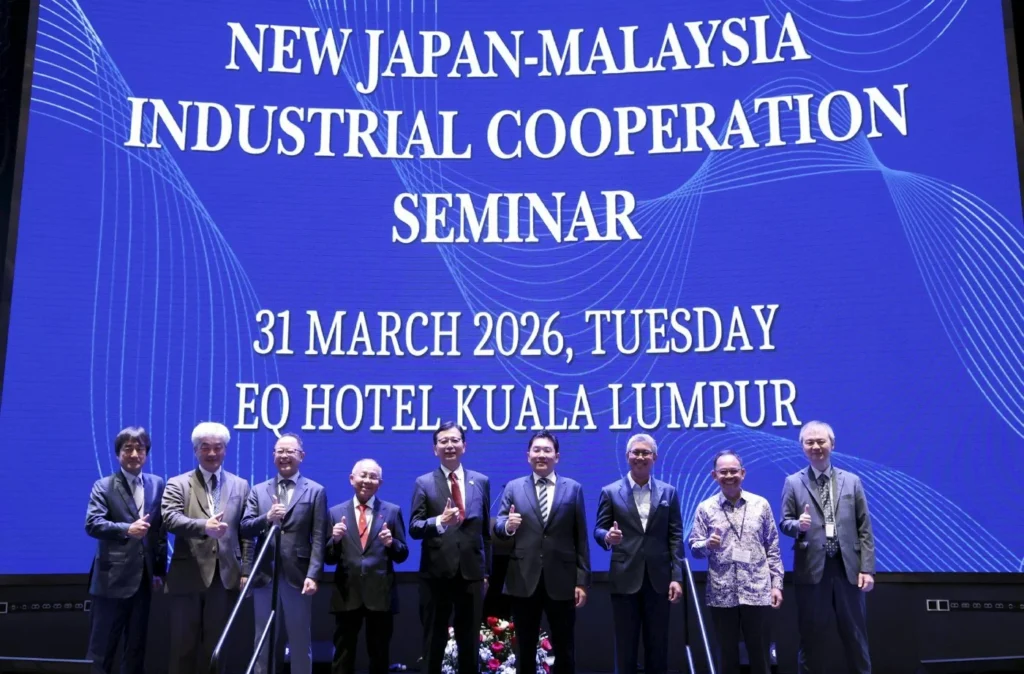
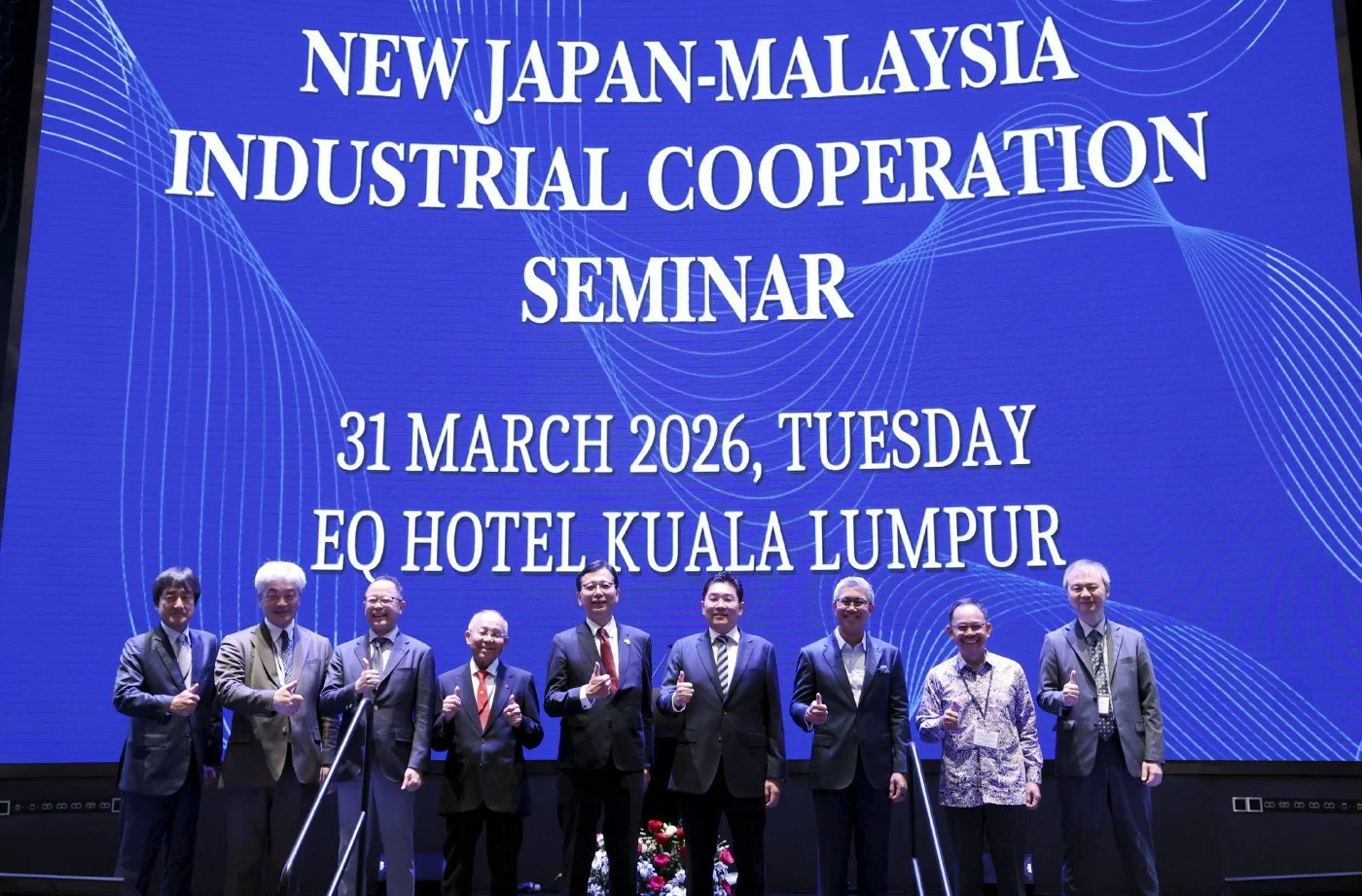
Malaysia is pushing for closer industrial ties with Japan, particularly in semiconductors, as outlined at the New Japan-Malaysia Industrial Cooperation Seminar.
Sim Tze Tzin, Deputy Investment, Trade and Industry Minister, said Malaysia’s 17 free trade agreements make it “very neutral ground” for Japanese firms seeking to diversify their supply chains.
What Was Announced at the Seminar?
Sim said Malaysia had implemented 2,872 manufacturing projects worth RM107.9 billion as of December 2025.
Bilateral trade between Malaysia and Japan reached RM142.9 billion in 2025, and total trade grew a further 2.3 per cent in January 2026 to RM12.8 billion.
Which Semiconductor Segments Is Malaysia Targeting?
Under the National Semiconductor Strategy, launched in May 2024, Malaysia is moving into integrated circuit design, advanced packaging and semiconductor R&D.
Sim specifically flagged lithography as an emerging opportunity, calling it “a critical component of semiconductor manufacturing.”
He also pointed to 17 strategic fields aligned with Japan’s priorities, including green transformation and economic security, plus growth areas such as speciality chemicals, advanced materials, medical devices, EVs, carbon capture, aerospace and critical minerals.
How Big Is Japan’s Existing Footprint in Malaysia?
Tengku Zafrul said Japan remains one of Malaysia’s top investors, with RM142.9 billion in approved investments spread across more than 3,800 projects that created about 500,000 jobs.
More than 2,800 projects have already been implemented, which he cited as proof of Japanese firms’ long-term commitment dating back five decades.
Japanese companies helped build Malaysia’s electrical and electronics industry in the 1970s, later expanding into chemicals, machinery, precision engineering, transport equipment and advanced semiconductor and digital sectors.
What Support Structures Exist for Japanese Investors?
Tengku Zafrul said Mida acts as a “full life-cycle partner” for Japanese investors, offering policy clarity and hands-on facilitation.
He highlighted the Mida-MUFG bank partnership and the Japanese Chamber of Trade & Industry, Malaysia network as channels specifically built to help Japanese SMEs enter the market.
Malaysia’s broader industrial transformation agenda — the New Industrial Master Plan, National Semiconductor Strategy and National Energy Transition Roadmap — underpins this higher-value collaboration push.
Why Does This Matter for Supply Chains Right Now?
Tengku Zafrul noted that conflict in West Asia has driven up energy prices, affecting chemicals and metals used in semiconductor production and disrupting regional supply chains.
He said this makes clarity on supply chain anchors urgent for Japanese companies, positioning Malaysia as a proven base rather than a speculative bet.
What Other Growth Targets Should Investors Track?
Sim said Malaysia aims to establish 3,000 smart factories by 2030, which he said will drive demand for industrial IoT, AI-enabled systems and advanced automation technologies.
He also urged Japanese firms to deepen engagement with Malaysian SMEs through training programmes, cross-border internships and knowledge-sharing, and to transfer both technology and management practices to local suppliers.
How Should Retail Investors Approach This?
Review the earnings reports and management commentary of Bursa Malaysia-listed electronics, semiconductor and precision engineering companies for references to Japanese partnerships, new contracts or smart-factory investments.
Consider using AI Stock Analysis for Malaysians to track which companies are positioned to benefit from this sector growth, or speak with a Malaysia’s First AI-Driven Remisier for personalised guidance on semiconductor sector exposure.
Key Takeaways for Bursa Malaysia Investors
- Malaysia-Japan bilateral trade reached RM142.9 billion in 2025, growing a further 2.3 per cent to RM12.8 billion in January 2026
- Japan’s approved investments span more than 3,800 projects and around 500,000 jobs, with over 2,800 projects already implemented
- Malaysia’s National Semiconductor Strategy (launched May 2024) is pushing into IC design, advanced packaging, R&D and lithography
- Malaysia targets 3,000 smart factories by 2030, a driver of demand for industrial IoT, AI systems and automation
- The Mida-MUFG bank partnership and Japanese Chamber of Trade & Industry network are specific channels for Japanese SME engagement in Malaysia
📰 Source: View Original Article — The content is based on the original publisher. Refer to the original content for accurate info. Contact us for any changes.
📚 Related Resources from Dexter Chia
Disclaimer: This article is for informational purposes only and does not constitute financial advice. Always do your own research before making investment decisions.
Want to invest in Bursa Malaysia or US markets? Contact Dexter Chia, an AI Driven Remisier who has 2,200+ clients at Malacca Securities Sdn Bhd (M+ Global). M+ Global Invitation Code: UBZQ | WhatsApp: +60169059789 | Why Choose Dexter?