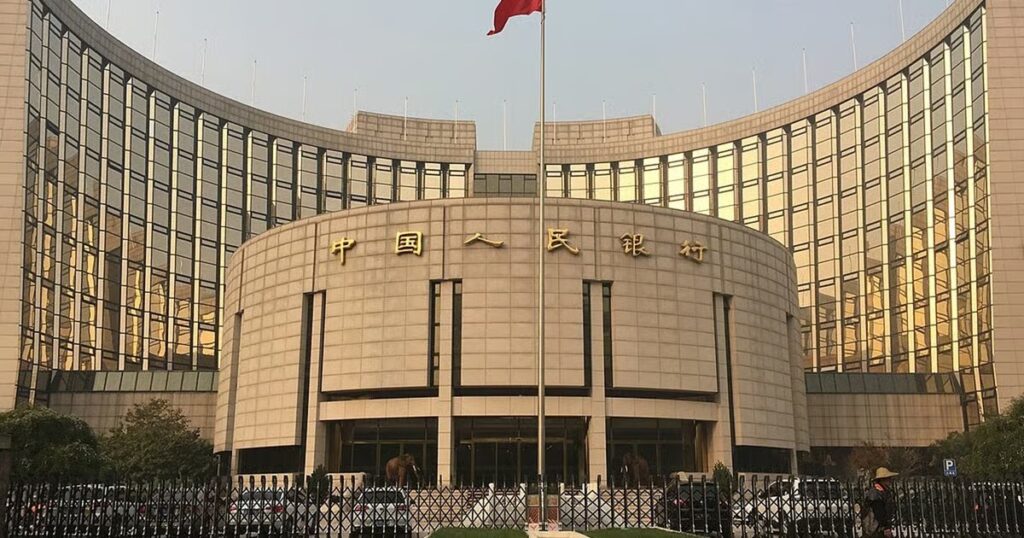
**China’s central bank overnight rate** is becoming the centrepiece of Beijing’s monetary toolkit. The **People’s Bank of China (PBOC)** said in a statement that overnight operations will run through a fixed-rate, quantity-based tender on each business day, with the operating rate at **1.25%**. The bank flagged the shift earlier this month.
Why Is the PBOC Moving to a 1.25% Overnight Rate?
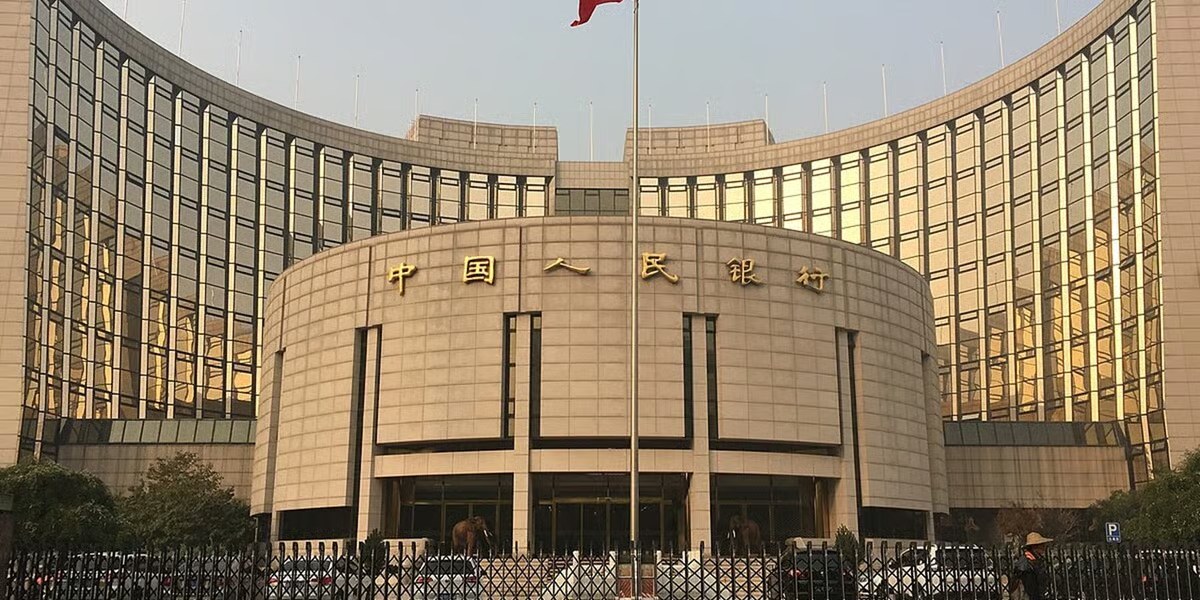
**PBOC Governor Pan Gongsheng** said earlier this month at a financial forum that the bank was studying a switch of its main policy rate to the **overnight reverse repo rate**. The **1.25%** operating rate is disclosed for the first time and is broadly in line with market expectations and reported borrowing cost.
The bank said the move aims to further improve its management of short-term interest rates. **Overnight reverse repo operations** debuted in late June as the latest addition to the PBOC’s toolkit.
How Does the 1.25% Overnight Rate Compare With the 7-Day Reverse Repo?
The overnight rate sits **below the 7-day reverse repo rate of 1.4%**, a gap of 0.15 percentage points. Under the old system, other tools were priced at a spread above or below the seven-day rate.
Those tools now move to a spread over the overnight reverse repo rate, with the size of the spreads left unchanged. They include temporary repo and reverse repo operations and repo facilities for overseas central bank-type institutions.
What Changes for the 7-Day Reverse Repo Operations?
The PBOC said its seven-day reverse repo operations will shift to a **fixed-quantity, interest-rate tender** with multiple winning bid rates. These operations will be conducted mainly around tax payment periods and month-ends.
- Overnight operation rate: 1.25%, fixed-rate, quantity-based tender each business day
- 7-day reverse repo rate: 1.4%
- Seven-day tender: fixed-quantity with multiple winning bid rates
- Spreads for other tools: unchanged, now measured against the overnight rate
What Are Economists Saying About the Shift?
**Zhou Hao, chief economist at Guotai Junan International**, called the operation “arguably the clearest signal yet” that the PBOC is moving toward an overnight-rate system. He cited the **Federal Reserve, the European Central Bank and the Bank of Japan** as the models.
**Ming Ming, chief economist at Citic Securities**, said the reform of the short-end mechanism lays the groundwork for diversifying pricing benchmarks for loan rates. He also linked it to the transmission of broad-based interest rate declines.
Is Any Bursa Malaysia Stock Named in This Report?
No Malaysian listed company is named in the source, so this report carries no Bursa figures for earnings, dividends or valuation. Shareholders with China exposure will need to check each company’s own filings on Bursa Malaysia.
The **PBOC’s pricing anchor** is the change worth monitoring, since loan benchmarks may now be built on the overnight rate. Do your own research before acting on any central bank policy change.
Key Takeaways
- The PBOC runs overnight operations at **1.25%** through a fixed-rate, quantity-based tender each business day.
- The overnight rate sits **0.15 percentage points below** the 7-day reverse repo rate of 1.4%.
- The seven-day reverse repo moves to a multiple-bid-rate tender, mainly around tax payment periods and month-ends.
- Other tools are now priced at unchanged spreads to the overnight reverse repo rate.
- The source names no Bursa Malaysia company, so do your own research before drawing any local conclusion.
Frequently Asked Questions
What is China’s overnight rate set at?
The People’s Bank of China set its overnight operation rate at 1.25%, disclosed for the first time. The rate sits below the 7-day reverse repo rate of 1.4%.
How far is the overnight rate below the 7-day reverse repo rate?
The overnight rate of 1.25% is 0.15 percentage points below the 7-day reverse repo rate of 1.4%. The PBOC is studying a switch of its main policy rate to the overnight reverse repo rate.
When did the PBOC start overnight reverse repo operations?
Overnight reverse repo operations debuted in late June as the latest addition to the PBOC’s toolkit. The source does not give a year.
Does the PBOC overnight rate affect Bursa Malaysia stocks?
The source does not name any Bursa Malaysia listed company or give any Malaysian figures. Investors should check each company’s filings on Bursa Malaysia and do their own research.
Source: View Original Article — The content is based on the original publisher. Refer to the original content for accurate info. Contact us for any changes.
Related Articles & Resources
Disclaimer: This article is for informational purposes only and does not constitute financial advice. Always do your own research before making investment decisions.
Want to invest in Bursa Malaysia or US markets? Contact Dexter Chia, an AI Driven Remisier who has 2,200+ clients at Malacca Securities Sdn Bhd (M+ Global). M+ Global Invitation Code: UBZQ | WhatsApp: +60169059789 | Why Choose Dexter?