Construction payment delays are squeezing contractors even as the sector grows. The value of construction work done rose 8.8% year on year to RM47.8 billion in the second quarter of 2026, according to the Department of Statistics Malaysia.
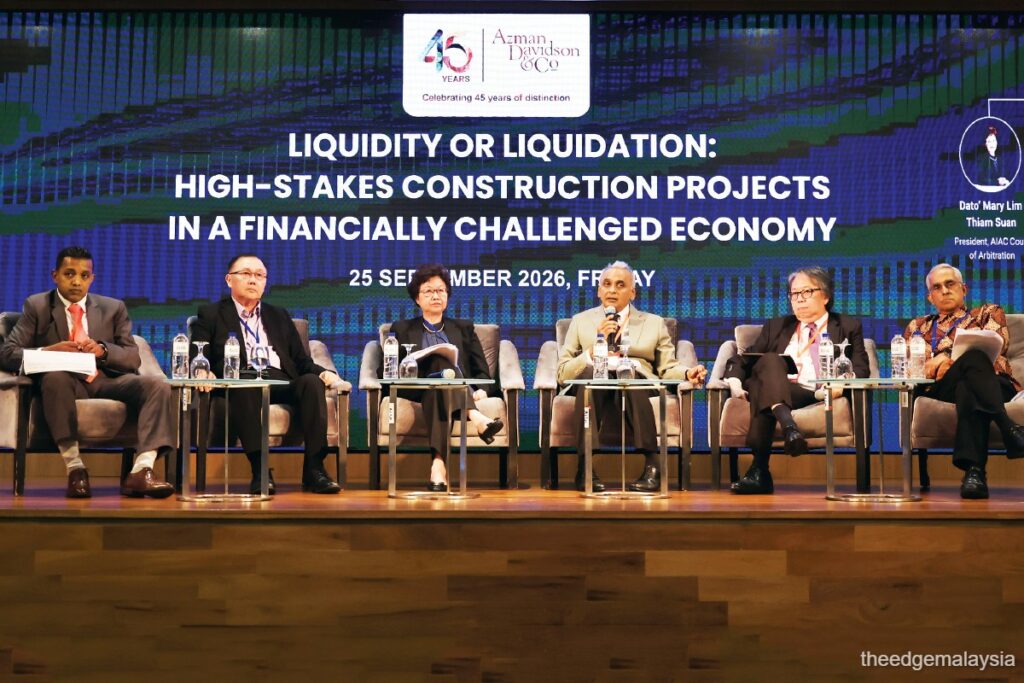
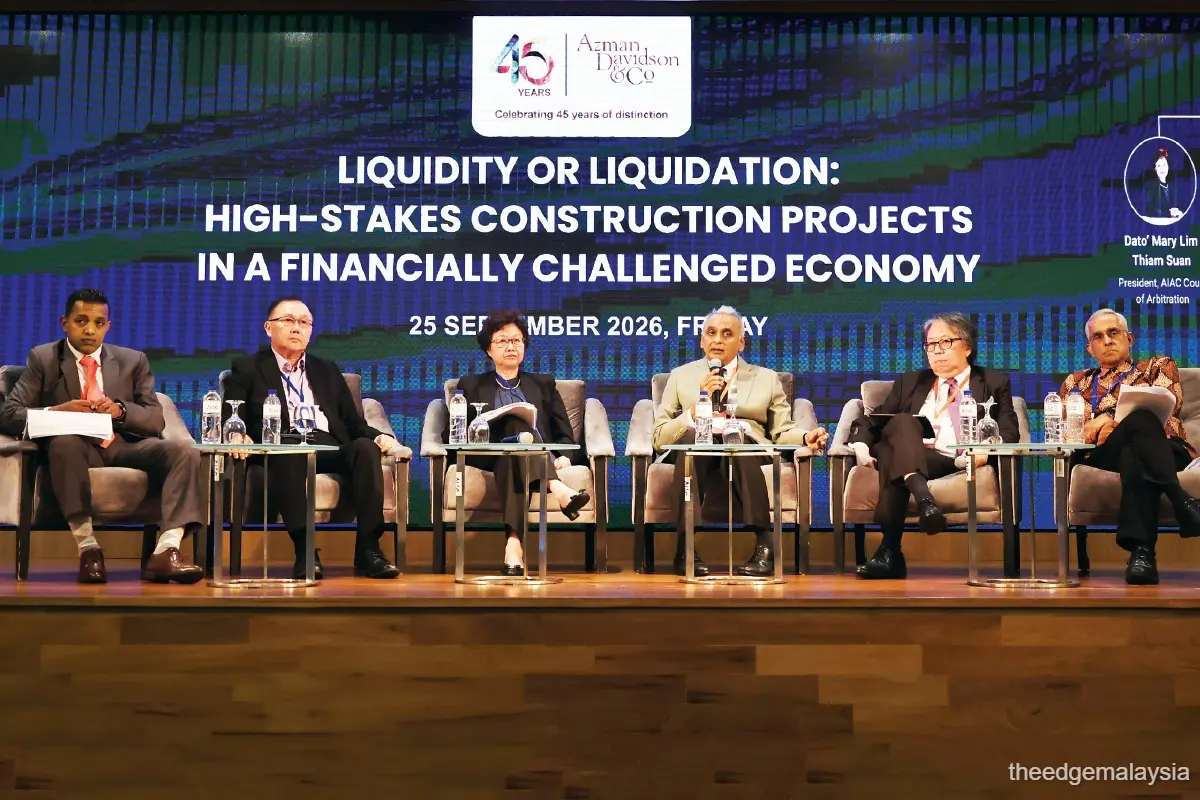
The warning came from a panel discussion on Sept 25, held alongside law firm Azman Davidson & Co’s 45th anniversary. Azman Davidson partner Raja Kumar Raja Kandan moderated, and the panel included AIAC Court of Arbitration president Datuk Mary Lim Thiam Suan and MBAM immediate past president Oliver H C Wee.
Why Are Construction Payment Delays Hurting Contractors?
Growth does not guarantee healthy cash flow. Wee said: “A lot of the time, it’s not really performance issues; it’s actually cash flow issues. And we are effectively [banks] without security.”
Projects are capital-intensive, margins are tight and material costs remain unpredictable. Contractors often pay workers, suppliers and subcontractors well before receiving full payment from the employer.
Why Do Contractors Act Like Unsecured Bankers?
Contractors are only paid by the developer after their work is completed, so Wee said their role increasingly resembles a financier. “Throughout the payment cycle, we realise that we have unintentionally become a funder. It is just like being a banker,” he said.
If payments are delayed or reduced, the pressure moves down the supply chain. Chong argued that developers should show financial strength before a project starts. “If you are a RM2 company, whatever value of security you have is the value of the assets,” he said.
Fixed-price contracts add to the strain. Material prices can rise after signing, supply chains can be disrupted and delivery timelines can shift. Wee said contractors are “fighting in a more competitive situation with thinner margins.”
How Big Is the RM155 Billion Contract Pipeline?
Contract awards were about RM234 billion in 2024 and RM243 billion in 2025. As at August, awards had reached about RM155 billion, roughly 60% of last year’s total, according to Wee.
Wee said “There are still a lot of jobs in the market.” He added that the risks attached to those jobs have changed, and that the chances of financial difficulties and disputes are “much higher than before.”
Can Contractors Recover Unpaid Money Through CIPAA?
The Construction Industry Payment and Adjudication Act 2012 (CIPAA) gives contractors a faster route to resolve payment disputes. Lim said the number of CIPAA cases has risen significantly since the legislation took effect in 2014.
Winning is not the same as getting paid. Lim said a contractor can win the dispute and still be unable to recover money from a financially distressed employer.
Smaller firms face the sharpest risk. More than 90% of Malaysia’s approximately 130,000 registered contractors are SMEs. Wee asked: “How many can survive three or four months without payment?”
Wee urged contractors to run a financial stress test before taking on a project. “Can your bank account survive if the client really can’t pay you for three certificates, or four certificates, while material prices are escalating?”
What Should Contractors Do When Employers Cannot Pay?
Rajendra Navaratnam said the right response depends on why an employer is not paying. Legal action may suit an employer that refuses to pay despite having the money, but forcing the issue may accelerate collapse if it cannot pay.
Deferred payments and payment in kind are among the alternatives. Rajendra said: “If they genuinely cannot pay, then I suppose the only way you can resolve it, step one, is always to begin the conversation.”
Datuk Adam Primus framed the outcome in blunt terms: “If there are surpluses, you share. If there are no surpluses, there is no deal.”
What Does This Mean for Bursa Construction Stocks?
The panel did not name any listed contractor or stock code. Its findings still point to balance-sheet risks worth monitoring: thin margins, fixed-price exposure and unpaid certificates.
Investors may want to watch trade receivables, the size of the order book and gearing in each contractor’s latest quarterly report. Compare these figures across peers to see which firms can absorb a delayed payment. Screening tools such as AI Stock Analysis for Malaysians can line these numbers up side by side.
Key Takeaways
- Construction work done rose 8.8% year on year to RM47.8 billion in the second quarter of 2026.
- Contract awards were RM243 billion in 2025 and about RM155 billion as at August.
- Contractors effectively finance projects through the payment cycle.
- CIPAA cases have risen significantly since 2014, but winning a dispute does not guarantee recovery.
- More than 90% of about 130,000 registered contractors are SMEs.
This article is for general information only and is not financial advice. Do your own research before making any investment decision, and consider your own risk tolerance.
Frequently Asked Questions
How much did Malaysia’s construction work done grow in 2026?
The value of construction work done rose 8.8% year on year to RM47.8 billion in the second quarter of 2026, according to the Department of Statistics Malaysia. The panel said growth does not necessarily translate into healthy cash flow for contractors.
Why do Malaysian contractors face cash flow problems?
Contractors often pay workers, suppliers and subcontractors before receiving full payment from the employer. They are only paid after their work is completed, which Oliver H C Wee of MBAM described as acting like a banker.
What is CIPAA and can it help contractors get paid?
CIPAA is the Construction Industry Payment and Adjudication Act 2012, which gives contractors a faster avenue for payment disputes. It took effect in 2014, but a contractor can win a dispute and still struggle to recover money from a financially distressed employer.
How many registered contractors in Malaysia are SMEs?
More than 90% of Malaysia’s approximately 130,000 registered contractors are SMEs, according to Oliver H C Wee. Wee said these firms need to run a financial stress test before taking on a project.
Source: View Original Article — The content is based on the original publisher. Refer to the original content for accurate info. Contact us for any changes.
Related Articles & Resources
Disclaimer: This article is for informational purposes only and does not constitute financial advice. Always do your own research before making investment decisions.
Want to invest in Bursa Malaysia or US markets? Contact Dexter Chia, an AI Driven Remisier who has 2,200+ clients at Malacca Securities Sdn Bhd (M+ Global). M+ Global Invitation Code: UBZQ | WhatsApp: +60169059789 | Why Choose Dexter?