Wall Street’s AI trade is under pressure, and the Nasdaq AI debt selloff is the main reason. Investors fear that borrowing costs will rise just as heavily indebted AI builders struggle to turn profits into debt repayment.
Why Did the Nasdaq AI Debt Selloff Drag Stocks Lower?
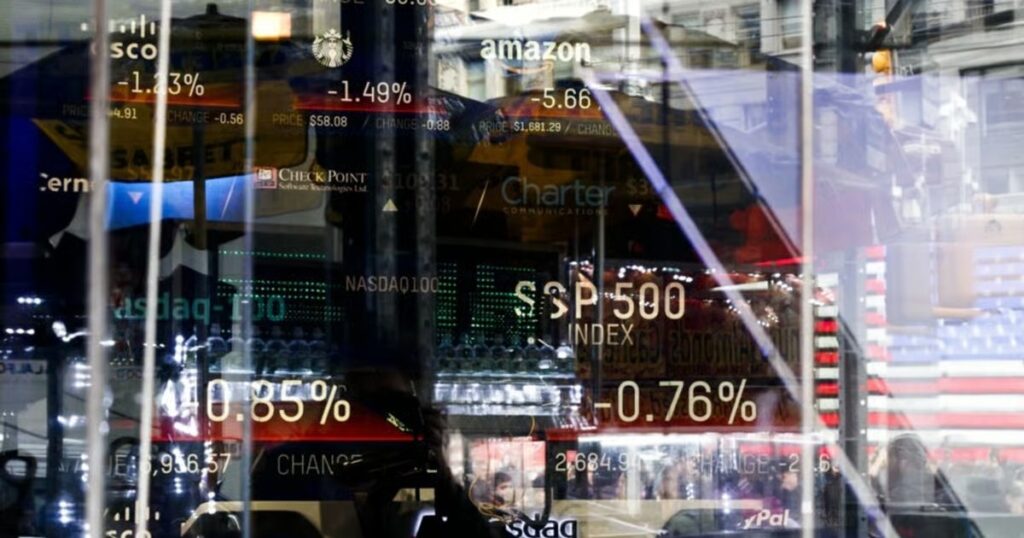
The S&P 500 slid 1.09% to 7,659.44 points, while the Dow Jones Industrial Average dipped 0.34% to 52,002.41 points. The Dow still gained 0.67% for the week, so the damage sat mostly in technology.
How Deep Is the CoreWeave Debt Problem?
Nvidia-backed CoreWeave slumped 12%, pushing its five-session loss to about 25%. Its bonds sold off sharply this week, lifting yields above 15%.
Broadcom fell 4.5% in the same session, showing the pressure reached beyond data centre operators.
Why Is the Chip Index on Its Longest Losing Streak Since 2008?
The PHLX chip index sank 3.8% in its eighth straight day of declines, its longest losing run since 2008. Some current and prospective Anthropic investors are weighing a lower valuation for the company’s upcoming IPO, Reuters reported, citing people familiar with the matter.
Is Oil Adding to Pressure on Stock Valuations?
Oil prices jumped more than 3% on Middle East supply worries. Rob Haworth, senior investment strategist at US Bank Wealth Management in Seattle, said “There is some fear in the market.”
Haworth added that “high oil prices, in particular, tend to weigh on the price/earnings multiple of stocks,” so investors are cautious heading into the weekend.
Where Did Money Rotate Within the S&P 500 Sectors?
Six of the S&P 500’s 11 sector indexes rose, led by energy at 2.47% and utilities at 1.4%. Volume reached 18.6 billion shares, above the 17.7 billion average of the previous 20 sessions.
Could the Fed Raise Rates in December and January?
Hotter-than-expected consumer and producer inflation reports showed price pressures extending beyond energy. Fed chair Kevin Warsh voiced optimism about US economic strength on Friday.
Markets increasingly expect the Fed to keep rates unchanged this month. Barclays now expects 25-basis-point hikes each in December and January.
How Narrow Is the 2026 S&P 500 Gain?
The S&P 500 is up about 12% in 2026, but most of that gain has come from AI-related tech stocks. The index’s median component has climbed only about 6% year to date.
About 185 S&P 500 stocks have lost ground in 2026. The S&P 500 posted 19 new highs and one new low, while the Nasdaq recorded 51 new highs and 353 new lows.
Which Earnings and Stocks Are Next on the Watchlist?
Third-quarter reports from Tesla, Meta Platforms and Procter & Gamble arrive next week. LSEG data shows analysts on average see quarterly earnings surging more than 30%, driven by AI-related megacaps.
Tesla dropped 3.1% after unveiling a redesigned Roadster developed with SpaceX. Netflix shares dipped 2.8% after it appointed former Disney executive Peter Rice as chief content officer.
Which Signals Matter for Bursa Malaysia Investors?
This source contains no Bursa Malaysia figures, so no local counter can be scored from it. Investors holding US-listed tech through a Malaysian broker may want to watch three signals: bond yields, the chip index losing streak and the Fed’s rate path. Check how your holdings are set up through Trading Account Types in Malaysia.
Key Takeaways
- Nasdaq fell 4.48% for the week, its deepest decline since June.
- CoreWeave shares lost 12% on Friday and about 25% over five sessions, with bond yields above 15%.
- The PHLX chip index is on its longest losing streak since 2008.
- The S&P 500 is up about 12% in 2026, but its median stock is up only about 6%.
Disclaimer: This article is for information only and is not financial advice. Do your own research before making any investment decision.
Frequently Asked Questions
How much did the Nasdaq fall this week?
The Nasdaq slumped 4.48% for the week, its deepest weekly decline since June. It fell 2.15% on Friday to end at 26,140.03 points.
Why did CoreWeave shares fall?
CoreWeave slumped 12% on Friday, bringing its loss over five sessions to about 25%. Concerns that debt-laden AI infrastructure companies may not turn profits in time to repay debts hit the stock and its bonds, which pushed yields above 15%.
Is the S&P 500 still up in 2026?
The S&P 500 remains up about 12% in 2026. Most of that gain came from AI-related tech stocks, while its median component is up only about 6%.
Will the Fed raise interest rates soon?
Markets increasingly expect the Fed to keep interest rates unchanged this month. Barclays now expects 25-basis-point hikes each in December and January.
Source: View Original Article — The content is based on the original publisher. Refer to the original content for accurate info. Contact us for any changes.
Related Articles & Resources
Disclaimer: This article is for informational purposes only and does not constitute financial advice. Always do your own research before making investment decisions.
Want to invest in Bursa Malaysia or US markets? Contact Dexter Chia, an AI Driven Remisier who has 2,200+ clients at Malacca Securities Sdn Bhd (M+ Global). M+ Global Invitation Code: UBZQ | WhatsApp: +60169059789 | Why Choose Dexter?