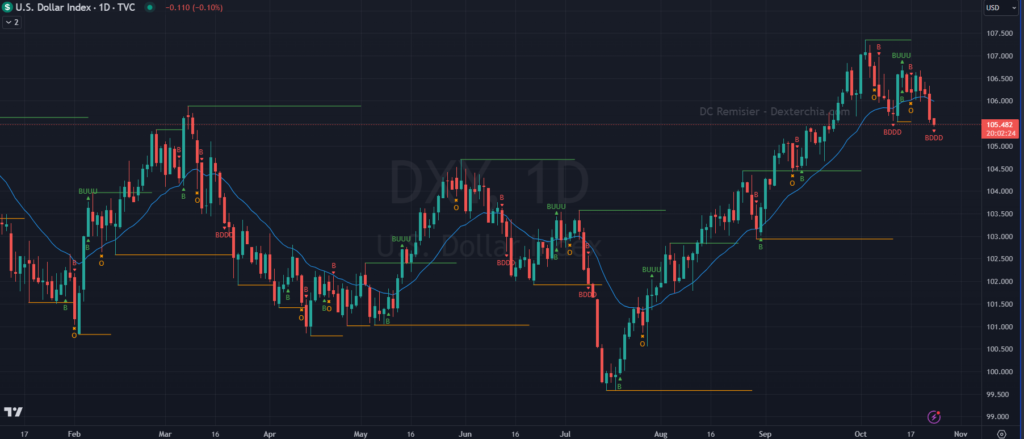
Bursa Malaysia Retreat Signals Midday Profit-Taking
The pattern is familiar: strong open, weak close. Bursa Malaysia’s pullback after a morning rally is a textbook example of profit-taking that dominates Malaysian retail and institutional trading behaviour during volatile market conditions. This reversal typically occurs when early-session optimism — often driven by overnight global market signals or positive corporate earnings — collides with midday risk reassessment.
When markets open higher, smaller gains get locked in quickly by traders running short-term positions. Retail investors on platforms like contra accounts often close morning positions by lunchtime to realise modest returns. Simultaneously, institutional fund managers rebalance portfolios or cut exposure ahead of major economic data releases or external shocks.
What Sectors Are Feeling The Pressure?
Export-sensitive sectors bear the brunt of Bursa Malaysia volatility. Semiconductor and technology stocks, heavily weighted on the exchange, respond sharply to U.S. trade signals, chip cycle indicators, and Ringgit weakness. The semiconductor subindex typically underperforms when the local currency weakens, making exports less attractive in foreign-currency terms.
Plantation stocks — a traditional Bursa Malaysia heavyweight — are particularly vulnerable to crude palm oil (CPO) price swings. When CPO futures retreat on global demand concerns or inventory build-ups, investors exit plantation counters immediately. Similarly, banking stocks like Maybank (1155) and CIMB Group (1023) face selling pressure when interest rate expectations shift or loan growth forecasts decline.
Telecommunications stocks including Maxis (6012) and Axiata (6888) typically hold up better during volatility, as they’re defensive counters. However, even dividend payers struggle when broader market sentiment turns negative and investors rotate into cash or bond positions for yield.
Why Do Markets Open Strong Then Retreat?
Overnight global cues drive Bursa’s morning open, but local reality sets in by afternoon. When Wall Street closes positively or Asian markets like Singapore and Hong Kong trade higher overnight, Bursa Malaysia investors get excited. Buying orders flood in at the 9:00 AM open, pushing the index higher within the first 30 minutes.
But as the day progresses, three things happen: First, retail traders cash in small gains. A RM200-300 profit on a RM10,000 position feels tangible and immediate. Second, institutional traders wait for the 2:00-3:00 PM window — when the U.S. market is about to open — to make larger directional bets. Third, any negative local news (currency depreciation, economic data disappointment, or earnings miss) gets heavily sold because there’s less time left in the trading day to recover.
The Ringgit weakness is particularly important. When the RM depreciates against the USD — say from 4.20 to 4.25 per dollar — foreign institutional investors find it harder to justify holding RM-denominated assets. Their returns get diluted by currency losses. This forces selling pressure, especially in blue-chip counters where daily liquidity is highest.
What Should Retail Investors Monitor During These Retreats?
Volume is the key signal during Bursa Malaysia volatility. If the retreat happens on rising volume (above the 30-day average), it suggests genuine selling conviction. Investors fleeing positions permanently. But if volume is light and prices just drift lower, it’s likely profit-taking and exhaustion — meaning the retreat may be shallow and reversible.
Watch the FBM KLCI index closing level carefully. If it closes in the lower half of the day’s range, the trend favours bears the next day. If it recovers to close near the high, bulls retain control. The difference might be 15-20 points, but on a RM50 billion average daily traded value, that’s significant capital rotation.
Check which sectors held up best. If technology and plantation stocks retreated but banking and utilities stayed flat, it signals selective selling — professional traders choosing where to cut risk. This is healthier than broad-based panic. Conversely, if all sectors retreat together, it’s a warning that macro concerns (recession fears, rate hike cycles, geopolitical tension) are dominating sentiment.
Currency pairs matter immensely. Monitor USD/MYR and SGD/MYR throughout the trading day. A Ringgit that weakens as Bursa retreats suggests foreign fund outflows. That’s a red flag for the next few trading sessions. But if the Ringgit strengthens during the retreat, it means local buyers are stepping in — a technical positive.
Is This Retreat Temporary or a Warning Sign?
Context is everything. A one-day retreat after a strong open is normal. Malaysian markets experience 2-3 such reversals each month. However, if retreats happen consistently over 5-10 consecutive trading days, technical support levels are being tested. Once those snap, deeper selling can accelerate.
During market retreats, some quality counters with strong earnings growth, rising dividends, and low debt valuations may see their share prices compress. Companies with these characteristics are often viewed as having solid fundamentals.
Those trading on momentum or using technical analysis often reference stop-loss levels as part of risk management. For example, a trade entered at 4,950 points expecting a push to 5,050 may involve a predefined exit level around 4,900. Managing losing trades is one aspect of preserving capital over time.
Which Stocks to Monitor After the Retreat
Watch for gap-up openings the next trading day. If Bursa Malaysia closes lower but opens higher the next morning, the retreat was likely a false breakdown. This creates “V-shaped” recovery patterns that reward patient buyers. Conversely, if the next day opens lower and pushes downward, the retreat was the start of a longer correction.
Banking stocks like RHB Bank (1066) and Hong Leong Bank (5819) are worth monitoring because they lead the market during reversals. When banking stocks refuse to fall despite broader retreat, it signals institutional accumulation. Large fund managers often buy banks on weakness because dividend yields become attractive.
Technology stocks including Pentamaster (0175) and semiconductor-linked counters deserve attention. These are the most volatile during daily swings, which creates opportunity for swing traders but risk for position holders. If these bounce back with strong intraday recovery, the retreat had shallow conviction.
Construction and property stocks may also be worth watching. These are cyclical and sensitive to interest rate expectations. During a retreat, property developers often oversell because investors worry about loan affordability for buyers. This creates good entry points for long-term holders expecting eventual rate cuts.
Key Takeaways for Bursa Malaysia Investors
- Profit-taking is normal: Not every retreat signals a bear market. Daily reversals are healthy market mechanics where weak hands exit and strong hands accumulate.
- Volume matters more than direction: A retreat on light volume is noise. A retreat on heavy volume is a warning that requires attention.
- Sector rotation tells the story: When selective sectors hold up during retreats, institutional investors are reallocating — not panicking. Monitor which stocks buck the retreat trend.
- Currency movements drive Bursa: A weak Ringgit amplifies local market weakness because foreign investors face currency headwinds on returns. Check USD/MYR daily.
- Technical support levels matter: Identify key index support (e.g., 4,900, 4,850 points) before the retreat happens. If breached, prepare for deeper selling.
Bottom Line: Trading the Bursa Malaysia Retreat
Retreat-and-recovery is the rhythm of Bursa Malaysia.
The key is discipline: define your strategy beforehand, set stop-losses, and don’t chase retreating stocks hoping for quick reversals. Bursa Malaysia has ample opportunity, but only for investors who respect volatility rather than resent it.
For those looking to refine their trading strategy during volatile sessions, consider learning more about trading account types available in Malaysia, which can help match your investment approach to the right platform and tools.
Disclaimer: This analysis is for educational purposes only and not investment advice. Always conduct your own research and consult a licensed financial advisor before making trading or investment decisions. Past performance does not guarantee future results. Bursa Malaysia volatility can result in significant losses as well as gains.
Source: View Original Article — The content is based on the original publisher. Refer to the original content for accurate info. Contact us for any changes.
Related Resources from Dexter Chia
Disclaimer: This article is for informational purposes only and does not constitute financial advice. Always do your own research before making investment decisions.
Want to invest in Bursa Malaysia or US markets? Contact Dexter Chia, an AI Driven Remisier who has 2,200+ clients at Malacca Securities Sdn Bhd (M+ Global). M+ Global Invitation Code: UBZQ | WhatsApp: +60169059789 | Why Choose Dexter?