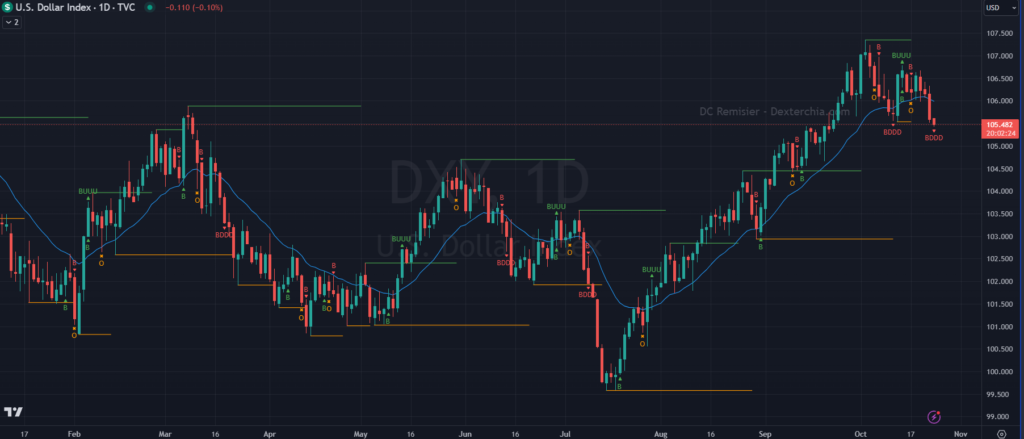
Asian stocks skid as oil slips, but bonds and Wall Street futures cushioned the fall. Brent futures dropped 1.6% to US$108.06 a barrel, helping S&P 500 futures edge up 0.5%. For Bursa Malaysia watchers, the bigger story is the AI chip slump.
Why Did Asian Stocks Skid as Oil Prices Fell?
Oil fell after US president Donald Trump decided to waive some sanctions on Russia. He later said a final decision had not been made.
Marco Rubio, US secretary of state, said the president would take up to 60 days to assess the economic impact. Brent fell 1.6% to US$108.06, while US crude lost 0.7% to US$100.70 a barrel.
Iran also reported another tanker had hit a mine in the Strait of Hormuz.
How Far Did the Nikkei and South Korea Fall?
- Japan’s Nikkei: down 2.0%, after losing 5.4% last week as the tech sector took a beating
- South Korea: down 1.6%, after shedding more than 14% last week
- MSCI Asia-Pacific index (ex-Japan): down 0.3%
Why Are AI Stocks Under Pressure in the Semiconductor Sector?
The PHLX Semiconductor Index shed 11.4% last week, its longest losing streak since 2008. Goldman Sachs expects five AI hyperscalers to lift capital spending to about US$1.2 trillion next year.
My Bui, an economist at fund manager AMP, said investors have long doubted AI revenues will recoup the massive upfront investment. Rising government bond yields and wider corporate credit spreads are also raising financing costs.
Which Earnings Reports Are Worth Monitoring This Week?
Investors will be hoping Meta beats Wall Street forecasts when it reports on Wednesday. Lam Research, Texas Instruments, SpaceX and Tesla also report this week.
Netflix, Procter & Gamble, General Motors and GE Aerospace are on the same calendar. Earnings are still expected to rise 30%, driven by huge profits at tech firms.
What Do Bonds, the Euro and Gold Signal?
- 10-year Treasury yield: down 3 basis points at 5.0645%, after its largest weekly fall in over eight months
- S&P 500 futures: up 0.5%; Nasdaq futures: up 0.8%
- Euro: down 0.2% to US$1.1212, near last week’s 16-month low of US$1.1113
- Dollar/yen: 157.75, in a tight range as Japanese intervention threats kept speculative sellers at bay
- Gold: up 0.4% to US$4,181 an ounce
European stocks were weighed down by political uncertainty in France. EUROSTOXX 50 futures fell 0.4%, DAX futures lost 0.3%, and FTSE futures were flat.
What Does This Mean for Bursa Malaysia Shareholders?
This report names no Bursa Malaysia-listed company, so the link is indirect. The channel to watch is financing: higher yields raise borrowing costs for capital-heavy tech build-outs.
Shareholders with exposure to regional tech can track the gap between yields and earnings. A framework for this is covered in AI Stock Analysis for Malaysians.
Key Takeaways
- Oil fell, but Asian stocks skid as Japan’s Nikkei dropped 2.0% and South Korea fell 1.6%.
- The PHLX Semiconductor Index shed 11.4% last week, its longest losing streak since 2008.
- Five AI hyperscalers may spend about US$1.2 trillion next year, according to Goldman Sachs.
- Meta’s Wednesday earnings are a key test for AI spending sentiment.
Disclaimer: This article is for information only and is not financial advice. Do your own research and consider your risk profile before making any investment decision.
Frequently Asked Questions
Why did Asian stocks skid today?
Asian stocks fell as tech concerns weighed on markets, with Japan’s Nikkei down 2.0% and South Korea down 1.6%. Falling oil prices limited the losses.
How much did the PHLX Semiconductor Index fall last week?
The PHLX Semiconductor Index shed 11.4% last week, its longest losing streak since 2008. Meta’s earnings on Wednesday are one test of AI spending sentiment.
How far did South Korea’s stocks fall last week?
South Korea shed more than 14% last week and fell a further 1.6% in the latest session. Japan’s Nikkei lost 5.4% last week and 2.0% in the latest session.
Does the Asian stock sell-off affect Bursa Malaysia stocks?
The report names no Bursa Malaysia-listed company, so any impact is indirect. Shareholders can track bond yields and tech earnings as the main channels, and should do their own research.
Source: View Original Article — The content is based on the original publisher. Refer to the original content for accurate info. Contact us for any changes.
Related Articles & Resources
Disclaimer: This article is for informational purposes only and does not constitute financial advice. Always do your own research before making investment decisions.
Want to invest in Bursa Malaysia or US markets? Contact Dexter Chia, an AI Driven Remisier who has 2,200+ clients at Malacca Securities Sdn Bhd (M+ Global). M+ Global Invitation Code: UBZQ | WhatsApp: +60169059789 | Why Choose Dexter?