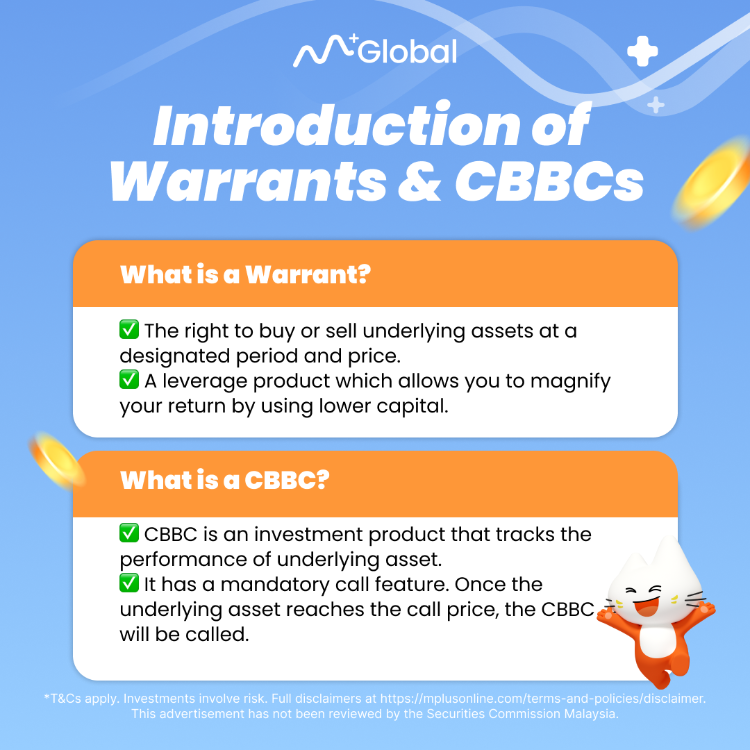
Warrants and CBBCs are financial instruments that offer you the potential to supercharge your investment game.
They give you the right, but not the obligation, to buy or sell an asset at a predetermined price within a specific time frame.
What are Warrant & CBBCs?
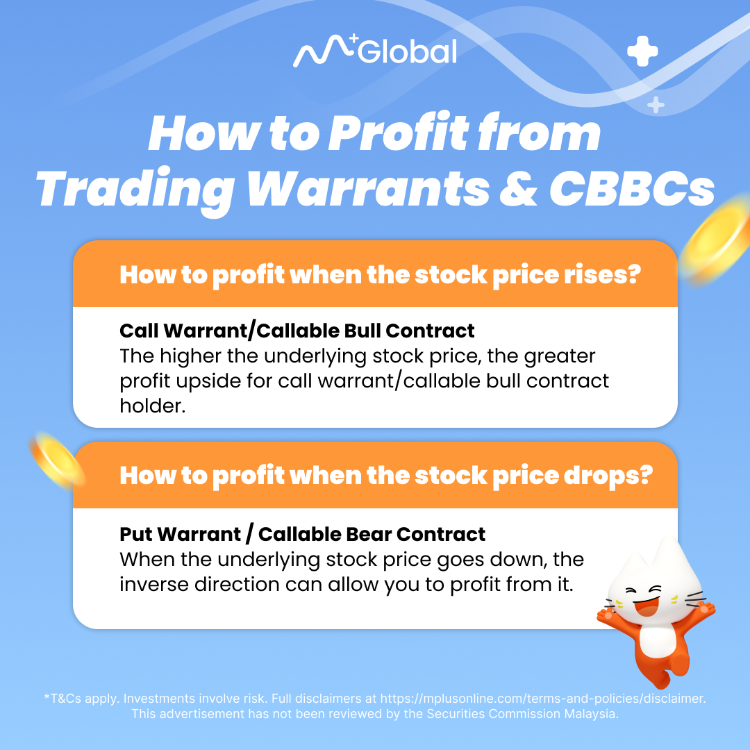
How to profit from trading them?
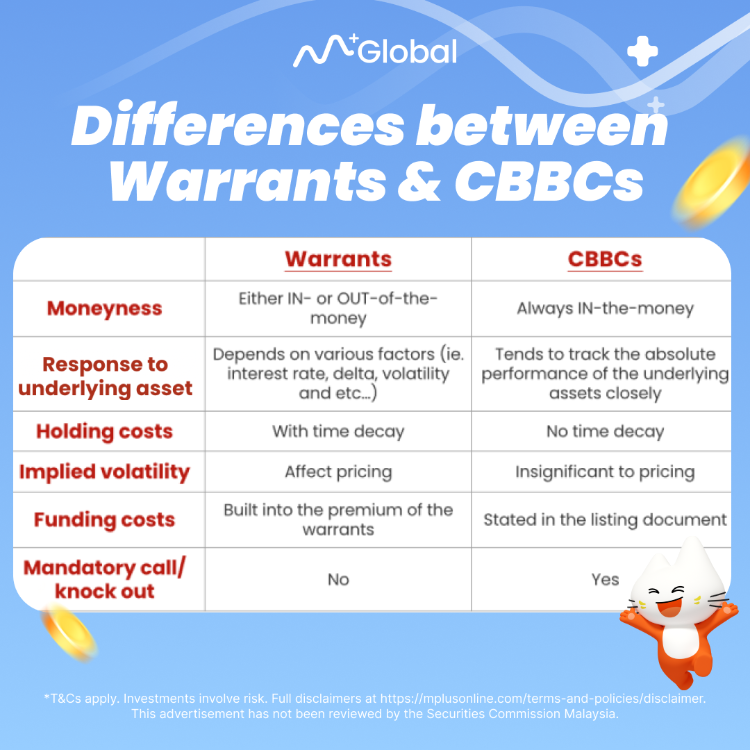
What are the differences between them?
To discover how they can provide you with unique opportunities to maximize your returns and achieve your financial goals,
You can watch this YouTube channel: M+ Online | Dexter Chia
Further Reading
Understanding Leverage and Risk
Warrants and CBBCs are leveraged instruments, meaning they allow you to control a larger position with a smaller upfront investment compared to buying the underlying asset directly. This amplifies both potential gains and potential losses. A small adverse move in the underlying asset can result in a significant percentage loss of your capital invested in the warrant or CBBC.
Unlike ordinary shares listed on Bursa Malaysia, where your loss is limited to what you invested, leveraged instruments carry the risk of rapid capital erosion. The time value of these instruments also works against you—as expiry approaches, a warrant or CBBC loses value even if the underlying asset price remains flat. This is particularly important for retail investors to understand before committing funds.
The cost of trading warrants and CBBCs includes brokerage (charged at M+ Global’s standard rates for Bursa securities), clearing fees, and stamp duty, just as with ordinary shares. These costs reduce your net return, so ensure your expected profit margin justifies the fees involved.
Who Should Trade Warrants and CBBCs?
Warrants and CBBCs suit active traders and investors with:
- Experience in reading market charts and understanding technical or fundamental analysis
- A clear view on short-term price direction of the underlying asset
- Capital they can afford to lose without affecting their financial security
- Time to monitor positions regularly, since these instruments are time-sensitive
- Understanding of how leverage works and disciplined risk management
Retail investors new to the market should first gain experience with ordinary shares before moving to leveraged instruments. These are not suitable for long-term buy-and-hold investing or for building core retirement portfolios. If your goal is wealth accumulation over years, ordinary shares and unit trusts are more appropriate.
Common Mistakes to Avoid
Many retail investors lose money on warrants and CBBCs by:
- Ignoring expiry dates: Always know when your warrant or CBBC expires. As expiry approaches, time decay accelerates, eating into your position value even if the underlying asset moves in your favour.
- Over-leveraging: Using too much of your portfolio in leveraged instruments means one bad trade can wipe out months of gains. Start small and scale up only after proven success.
- Chasing losses: After a loss, doubling down on high-risk positions to recover quickly often leads to larger losses. Stick to your pre-planned position size and stop-loss levels.
- Underestimating costs: Brokerage, clearing fees, and stamp duty add up quickly on frequent trades. Day traders and active traders must earn enough spread to cover these costs.
- Forgetting volatility: Warrants and CBBCs are most sensitive to sudden moves in the underlying asset. In calm, sideways markets, their value decays without compensating gains.
Frequently Asked Questions
Can I hold warrants and CBBCs long-term like ordinary shares?
Warrants and CBBCs have expiry dates, unlike ordinary shares which have no maturity. Once they expire, they become worthless regardless of the underlying asset’s price. Additionally, time decay continuously erodes their value, making them unsuitable for long-term buy-and-hold strategies. These instruments are designed for traders with a specific, time-bound view on price movement.
What happens to my warrant or CBBC position if the underlying stock is delisted?
If the underlying asset is delisted from Bursa Malaysia, the warrant or CBBC typically terminates, and you receive cash settlement based on the final valuation determined by the issuer. The exact settlement terms depend on the warrant or CBBC’s conditions, so always review the product documentation before investing.
How do I know if a warrant or CBBC is a good trade?
There is no single formula for identifying good trades. You should compare the warrant or CBBC’s strike price, expiry date, and leverage ratio against the underlying asset’s current price and your market outlook. Check the bid-ask spread—a wide spread makes it harder to enter and exit at fair prices. Most importantly, only trade instruments you understand fully, and apply consistent risk management rules such as stop-losses to every position.