UltraGreen.ai Share Price Collapse: The Numbers
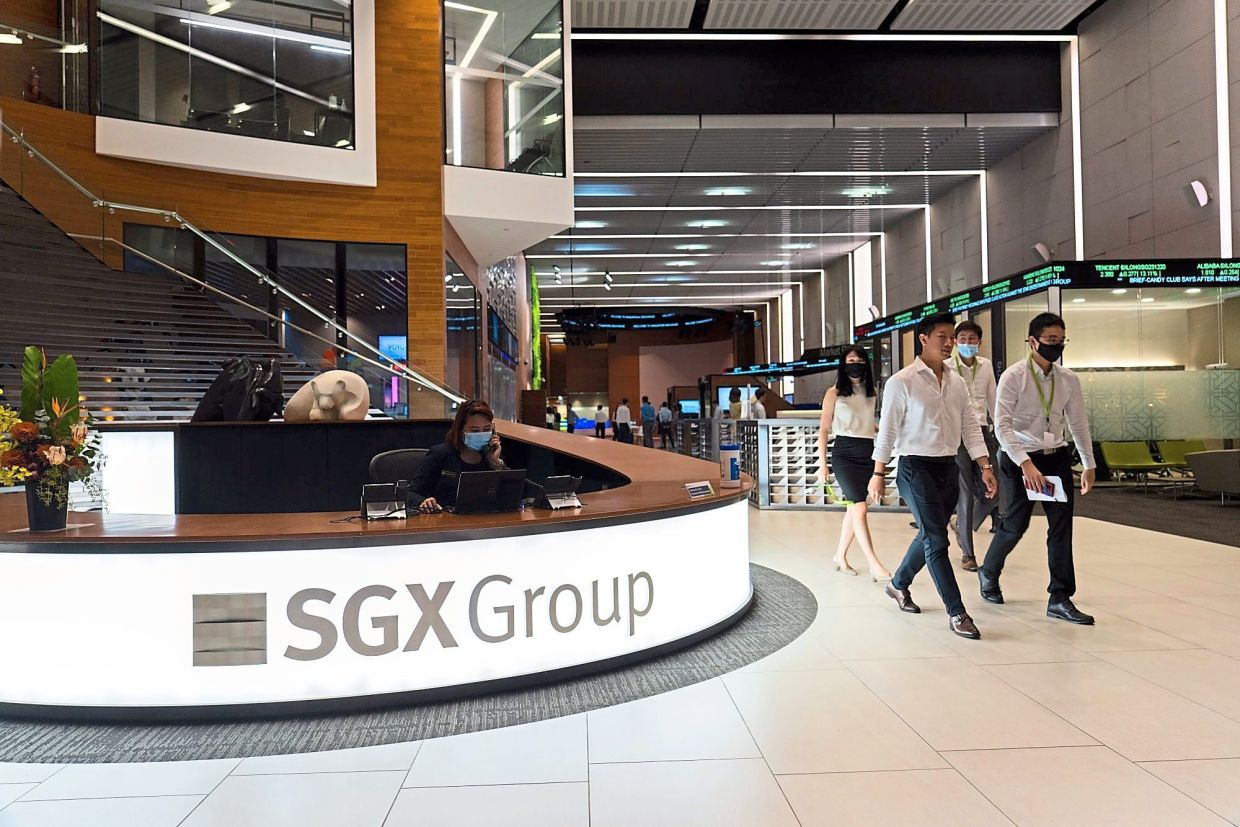
UltraGreen.ai shares have more than halved since its listing nine months ago, erasing massive losses for early investors. The counter last traded at 68.5 US cents on August 31, less than half its value when it commenced trading on the SGX mainboard at US$1.45 on December 3, 2025.
That represents a 53% collapse in share value — a brutal lesson for retail investors who bought into the Singapore Exchange’s push for IPO diversity. The company raised US$400 million (S$509 million) in its IPO, making it SGX’s largest non-REIT listing in eight years.
For Malaysian investors tracking regional IPO trends, this is a critical warning. IPO investing in unfamiliar sectors requires deep due diligence — particularly when companies operate in fast-moving, patent-sensitive markets.
What Does UltraGreen.ai Actually Do?
UltraGreen.ai develops a fluorescent dye called indocyanine green (ICG) used by surgeons to monitor blood flow, tissue structures and tumours under near-infrared light. ICG is most highly sought after for gastrointestinal, oncological and gallbladder surgery.
The company holds regulatory approvals to sell ICG in 46 countries, with the Americas making up 75% of its total revenue. For the first half of 2026 (1H26) ended June 30, the company recorded US$87.2 million in revenue.
UltraGreen.ai controls approximately 83% of the US market for ICG — a dominant position that looked almost unassailable before August 2026.
The Game-Changer: Generic Competition Arrives
Here’s where the trouble started. ICG technology is not patented in the United States, which means other companies can legally manufacture and market generic versions if they obtain FDA approval and meet the reference standard set by the incumbent.
In August 2026, Indian pharmaceutical giant Zydus Lifesciences received FDA approval for an ICG product — a seismic shift for UltraGreen.ai’s market dominance. The market immediately repriced the stock downward, recognizing that the 83% US market share was under direct threat.
Zydus now has a 180-day exclusivity period during which the FDA will not approve any other generic applications for ICG. However, the clock is ticking: Zydus must commercially market its ICG product within 75 days of receiving approval, or the exclusivity window closes.
This is classic biotech risk. A single regulatory event — one competitor’s FDA approval — can wipe 50%+ off a stock price, even when the fundamental business model remains intact.
What Went Wrong: SGX’s New-Economy IPO Gamble
SGX’s push to attract “new-economy” companies — technology, biotechnology and healthcare firms — was explicitly designed to reduce the bourse’s reliance on banks and REITs. UltraGreen.ai was positioned as a flagship play in this diversification strategy.
But the 53% share price plunge now puts the Singapore Exchange’s disclosure regime and companies’ investor relations under scrutiny. Did investors receive sufficient, clear and frequent explanations of the patent risk? Were the specialized risks of ICG market dominance adequately disclosed upfront?
An SGX spokesperson told The Straits Times: “It is important not to extrapolate the performance of any single company to an entire sector. Building a vibrant new-economy sector and ecosystem is a long-term effort requiring many elements to come together, including research coverage, active investor participation, as well as regular and transparent investor engagement and education.”
Translation: One company’s failure doesn’t kill SGX’s IPO diversification plans — but it does raise uncomfortable questions about whether current disclosure standards protect retail investors adequately.
Revenue and Market Position: The Fundamentals
UltraGreen.ai posted US$87.2 million in revenue for 1H26, with the Americas accounting for 75% of sales. This suggests a heavily US-dependent revenue base, which makes sense given the company’s dominant ICG market position in America.
The company’s geographic concentration is a material risk that investors should have weighted carefully at IPO. When 75% of revenue comes from one region, and that region is now facing direct generic competition, profit volatility is inevitable.
The broader question: Did the IPO prospectus adequately explain this concentration risk? Or did the hype around a “breakthrough biotech company” overshadow the hard numbers?
Key Risk: The Patent Vulnerability
This is the core issue that triggered the share price collapse. ICG technology lacks patent protection in the US market, meaning any competitor with FDA approval and manufacturing capability can legally produce generic versions.
Unlike pharmaceutical patents that grant 20-year exclusivity, ICG users face a “regulatory patent” model: you maintain market dominance through superior manufacturing, brand trust and first-mover advantage — not through legal patent protection.
Once Zydus Lifesciences cleared FDA approval, that first-mover advantage began eroding immediately. Hospitals and surgeons can now choose between UltraGreen.ai’s incumbent product and a potentially lower-cost generic alternative.
This is why the stock plunged. Investors suddenly realized the company’s 83% market share was transient, not durable.
What This Means for Malaysian Retail Investors
If you track regional IPO activity through SGX or are considering exposure to biotech and medtech companies, UltraGreen.ai offers three critical lessons:
1. Patent risk matters enormously in biotech. Companies without true patent protection face binary outcomes: they either maintain market dominance through brand and execution, or they lose share to generics overnight. There is rarely a middle ground.
2. Geographic concentration is a material risk. When 75% of revenue comes from one region (in this case, the US), political, regulatory or competitive shocks can devastate the entire business. This should have been front-and-center in IPO discussions.
3. New-economy IPOs require deeper due diligence. Unlike mature industrial or banking stocks, biotech companies operate in fast-moving regulatory environments where a single FDA decision can rewrite the investment thesis. If you don’t deeply understand the regulatory landscape, it’s safer to wait on the sidelines.
For Malaysian investors using platforms like M+ Global with Invitation Code UBZQ, SGX offers easier access than ever. But ease of access should never replace rigorous analysis.
Should You Monitor UltraGreen.ai Stock Now?
At 68.5 US cents (from US$1.45), the stock has already repriced to reflect new-economy risk. The question now is: does UltraGreen.ai have a defensible long-term position against Zydus and future competitors?
Key metrics to watch:
- US market share trends — any quarterly earnings showing ICG volume declines or price compression
- Zydus commercial launch timing — within the 75-day window from FDA approval (which started in August 2026)
- International revenue growth — can UltraGreen.ai offset US declines by expanding in the other 25% of markets?
- New product pipeline — are they developing next-generation dyes or adjacent technologies to maintain competitive moats?
- Profitability margins — if generics force price cuts, will the company remain profitable at lower revenue multiples?
This is a stock worth monitoring for its broader lessons on IPO risk, not necessarily for near-term trading opportunities. The best time to buy growth companies is often after a shock has reset market expectations — but only after validating that the core business remains intact.
The Bigger Picture: SGX’s IPO Diversification at Risk
Singapore Exchange explicitly set out to attract more “new-economy” companies to reduce dependence on financial stocks and REITs. UltraGreen.ai’s collapse now becomes a test case for whether this strategy can deliver value to retail investors.
If more new-economy IPOs disappoint early investors, SGX’s diversification push could stall — leaving the bourse with fewer listing candidates in growth sectors. Conversely, if this is a one-off stumble and other biotech/medtech/tech IPOs perform well, SGX’s thesis remains intact.
For retail investors in Malaysia and Singapore, this reinforces a timeless lesson: new-economy sectors offer growth potential, but they also bring complexity, volatility and regulatory risk. You must be prepared to lose capital if you don’t understand the business model deeply.
Key Takeaways for Retail Investors
- UltraGreen.ai shares collapsed 53% from US$1.45 (December 2025) to 68.5 US cents (August 2026), nine months after its US$400 million SGX IPO — the bourse’s largest non-REIT listing in eight years
- The stock price plunge was triggered by Indian pharma giant Zydus Lifesciences’ FDA approval for a competing ICG product in August 2026, eroding UltraGreen.ai’s 83% US market dominance
- ICG technology lacks patent protection in the US, meaning the company’s competitive moat depends on first-mover advantage and brand trust — both under threat from generic competition
- The company’s 1H26 revenue was US$87.2 million, with 75% derived from the Americas — a geographic concentration that magnifies downside risk if US market share erodes
- This case highlights why new-economy IPOs (biotech, medtech, tech) require deeper due diligence than traditional sectors — regulatory decisions can rewrite the investment thesis overnight
Next Steps for Monitoring Biotech Stocks
If you’re considering biotech or medtech exposure through SGX or other regional exchanges, apply these filters before committing capital:
- Does the company have true patent protection, or does it rely on regulatory moats that competitors can overcome?
- Is revenue diversified geographically, or concentrated in one market/customer segment?
- What is the competitive pipeline — are other companies close to approval for similar products?
- What margins does the company earn today, and how vulnerable are they to price competition from generics?
- Does management have a credible plan to defend market share or pivot to adjacent markets?
For deeper AI stock analysis tailored to Malaysian investors, or to explore how Malaysia’s first AI-driven remisier can assist with research, consider leveraging data-driven tools that strip away hype and focus on fundamentals.
UltraGreen.ai is worth monitoring as a case study in IPO risk, regulatory vulnerability and the dangers of market concentration — but only if you’re prepared to do the hard work of understanding the underlying business model before deploying capital.
Source: View Original Article — The content is based on the original publisher. Refer to the original content for accurate info. Contact us for any changes.
Related Resources from Dexter Chia
Disclaimer: This article is for informational purposes only and does not constitute financial advice. Always do your own research before making investment decisions.
Want to invest in Bursa Malaysia or US markets? Contact Dexter Chia, an AI Driven Remisier who has 2,200+ clients at Malacca Securities Sdn Bhd (M+ Online / M+ Global). M+ Global Invitation Code: UBZQ | WhatsApp: +60169059789 | Why Choose Dexter?