TA Securities Downgrades Banking Sector Amid Pre-Election Uncertainty
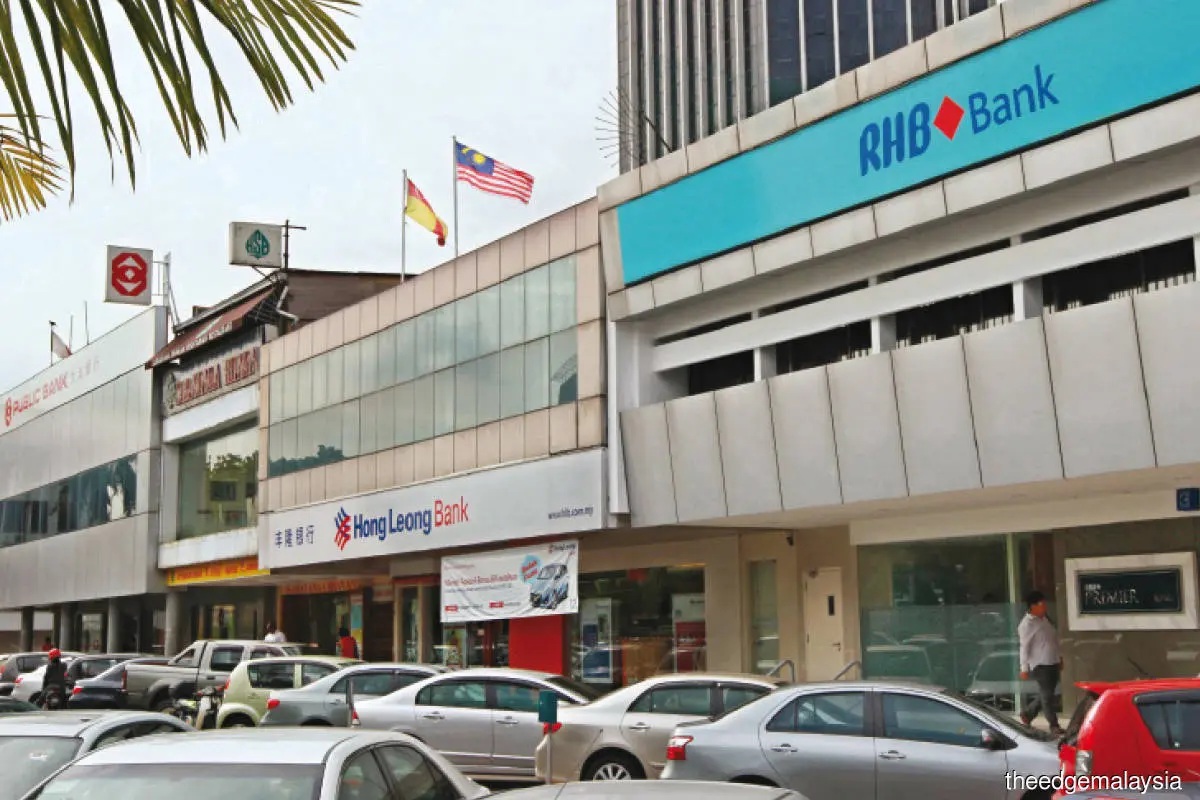
TA Securities has downgraded the Malaysian banking sector to ‘neutral’ from ‘overweight’ in a Thursday research note, citing mounting political uncertainty as Prime Minister Datuk Seri Anwar Ibrahim hints at a general election potentially scheduled for July.
The research house cut its price-to-book valuation targets significantly: to 1.17 times from 1.25 times for 2026, and to 1.12 times from 1.2 times for 2027. These compression moves reflect how investors are demanding higher risk premiums to hold banking stocks through the election cycle.
Malaysia’s banking sector is no ordinary market segment—it accounts for roughly one-third of the FBM KLCI’s total market capitalization, making it a barometer for both domestic and international investor sentiment on the broader economy and political stability.
Why Valuations Are Compressing Despite Strong Earnings
Here’s the critical disconnect: TA Securities acknowledged that local banks have resilient earning fundamentals, yet valuations are being squeezed. This is classic pre-election behavior—the fundamentals remain intact, but sentiment trumps numbers.
The research house observed that Malaysia’s current macroeconomic and political climate is fragmented and competitive, forcing investors to reassess risk exposure in banking stocks. When political uncertainty peaks, the price you’re willing to pay per ringgit of book value naturally contracts.
Investors requesting higher risk premiums means they’re essentially saying: “We’ll hold banking stocks, but only at a discount to historical valuations.” This is rational behavior in uncertain times, but it creates the very buying opportunity that contrarian investors watch for.
The Historical Pattern Foreign Investors Follow
TA Securities flagged a crucial historical precedent: foreign investors typically accumulate Malaysian banking stocks during the pre-election period, then reduce exposure once political uncertainty peaks. This suggests a window of opportunity exists right now for those willing to take a longer-term view.
The research house’s downgrade doesn’t signal distress in bank balance sheets—it signals valuation reset. Banks like Maybank, CIMB, Public Bank, and Hong Leong Bank continue generating strong net interest margins and asset growth, but the market is repricing the cost of holding these assets through an uncertain political period.
If you’re a retail investor with a 3-5 year horizon, compressed valuations in banking stocks may represent entry points rather than warning signs. However, the timing matters: accumulating before peak uncertainty could mean holding through a temporary further decline if election results surprise the market.
What Does This Mean for Investors?
The banking sector downgrade signals caution, not capitulation. TA Securities is telling investors that while banks remain fundamentally sound, near-term volatility is likely and valuations are no longer stretched.
For retail investors holding banking stocks already, this is not a sell signal. The research house is recommending neutral positioning—holding what you have but not aggressively accumulating at current prices until post-election clarity emerges.
For cash-rich investors looking to build positions, the compressed valuations (trading below historical norms) present a potential entry point IF you can tolerate 2-3 months of potential further price weakness ahead of or immediately after the election.
The banking sector represents roughly one-third of FBM KLCI weighting, so any rotation into or out of banking stocks significantly impacts overall portfolio returns. If you’re benchmarked to the KLCI through an ETF or unit trust, you’re already exposed to this political volatility.
Which Banking Stocks Are Most Affected?
All major Malaysian banks—Maybank (1155), CIMB (1023), Public Bank (1295), and Hong Leong Bank (5819)—are caught in the same valuation compression. There’s no selective downgrade here; it’s a sector-wide reassessment based on political risk, not individual bank performance.
Smaller regional banks and online trading accounts tracking specific banking exposures may see higher volatility as foreign funds rotate positions around the election calendar.
Key Risks and Timing Considerations
The main risk is timing. Buying “on the dip” during political uncertainty can backfire if elections produce unexpected results that prolong investor nervousness. TA Securities’ neutral rating suggests they’re uncertain which direction sentiment will break.
Election outcomes could shift the sector narrative in hours, not days. A government change, coalition realignment, or surprise policy announcements could either stabilize valuations or drive them lower depending on investor reaction to political outcomes.
Foreign investors typically exit once uncertainty peaks, which suggests the sweet spot for accumulation is likely now (pre-announcement) or immediately post-election once clarity is restored. The period between now and election day could see continued compression.
The Broader Market Context
Malaysian banking stocks aren’t just trading on local sentiment—they’re also influenced by regional interest rate expectations, currency movements, and crude oil prices (which affect the broader Malaysian economy). Political uncertainty adds a layer of domestic risk premium on top of these macro factors.
The FBM KLCI cannot perform strongly if the banking sector—its largest component—remains under pressure. This suggests that broader market recovery is unlikely until banking valuations stabilize post-election.
If you’re building a diversified Malaysian equity portfolio, the current environment suggests rotating into non-banking sectors (technology, healthcare, industrials) until election clarity emerges. Banking stocks may offer better entry points in 2-3 months than today.
What to Watch in Coming Weeks
Monitor official election announcements—the exact date matters enormously. If elections are confirmed for July, expect continued volatility through June. If delayed, valuations may stabilize as near-term political risk reduces.
Track foreign investor flows into Malaysian banks through stock exchange announcements. If foreign selling accelerates despite strong bank earnings, it confirms the political risk premium is driving prices, not fundamentals. Conversely, foreign accumulation despite political uncertainty would suggest smart money is positioning ahead of stabilization.
Watch for bank dividend announcements. Strong dividends during uncertain times signal confidence in cash generation and may provide support for valuations. For dividend investing strategies, banking stocks could offer attractive yields if prices fall further.
Pay attention to Bank Negara Malaysia (BNM) policy statements. Interest rate holds or cuts would support bank earnings growth even if equity valuations compress. Rising rates would offset some political concerns by improving net interest margins.
The Bottom Line for Retail Investors
TA Securities is essentially telling retail investors that banking stocks are not broken, just temporarily out of favor. The downgrade from ‘overweight’ to ‘neutral’ is a timing signal, not a quality signal.
If you have existing banking exposure, hold it—the fundamentals haven’t deteriorated. If you’re looking to add exposure, either accumulate gradually over the next few months or wait for post-election clarity. Rushing to buy compressed valuations right now risks getting caught in further temporary weakness ahead of political clarity.
The compressed 1.12-1.17x price-to-book valuations do represent better entry points than the historical 1.2-1.25x range, but the election date matters far more than current price levels. Markets hate uncertainty, and Malaysian banking stocks will likely remain volatile until voters have had their say.
For investors using AI-driven stock analysis tools, this is an excellent time to track banking sector rotation patterns and monitor when foreign investors shift from selling to accumulation—often the best signal that political risk premiums are normalizing.
Key Takeaways
- TA Securities downgraded banking sector to ‘neutral’ from ‘overweight’ due to pre-election political uncertainty and rising investor risk premiums
- Price-to-book valuations compressed to 1.12-1.17x from 1.2-1.25x for 2026-2027, reflecting investor caution despite strong bank earnings fundamentals
- Historical pattern shows foreign investors accumulate before elections, exit after—suggesting a potential timing window exists for contrarian positioning
- Banking sector represents one-third of FBM KLCI market cap—election volatility will significantly impact broader market performance
- Hold existing positions, but accumulate gradually or wait for post-election clarity—jumping in now risks catching further weakness if political outcomes disappoint markets
This analysis is based on research from TA Securities as reported in NST. Always conduct your own due diligence before making investment decisions, and consider consulting a licensed financial adviser if you’re uncertain about your portfolio positioning during volatile political periods.
Source: View Original Article — The content is based on the original publisher. Refer to the original content for accurate info. Contact us for any changes.
Research Note: Analysis referenced in this article is based on research published by TA Securities. This blog summarises publicly available information for educational purposes only.
Related Resources from Dexter Chia
Disclaimer: This article is for informational purposes only and does not constitute financial advice. Always do your own research before making investment decisions.
Want to invest in Bursa Malaysia or US markets? Contact Dexter Chia, an AI Driven Remisier who has 2,200+ clients at Malacca Securities Sdn Bhd (M+ Online / M+ Global). M+ Global Invitation Code: UBZQ | WhatsApp: +60169059789 | Why Choose Dexter?