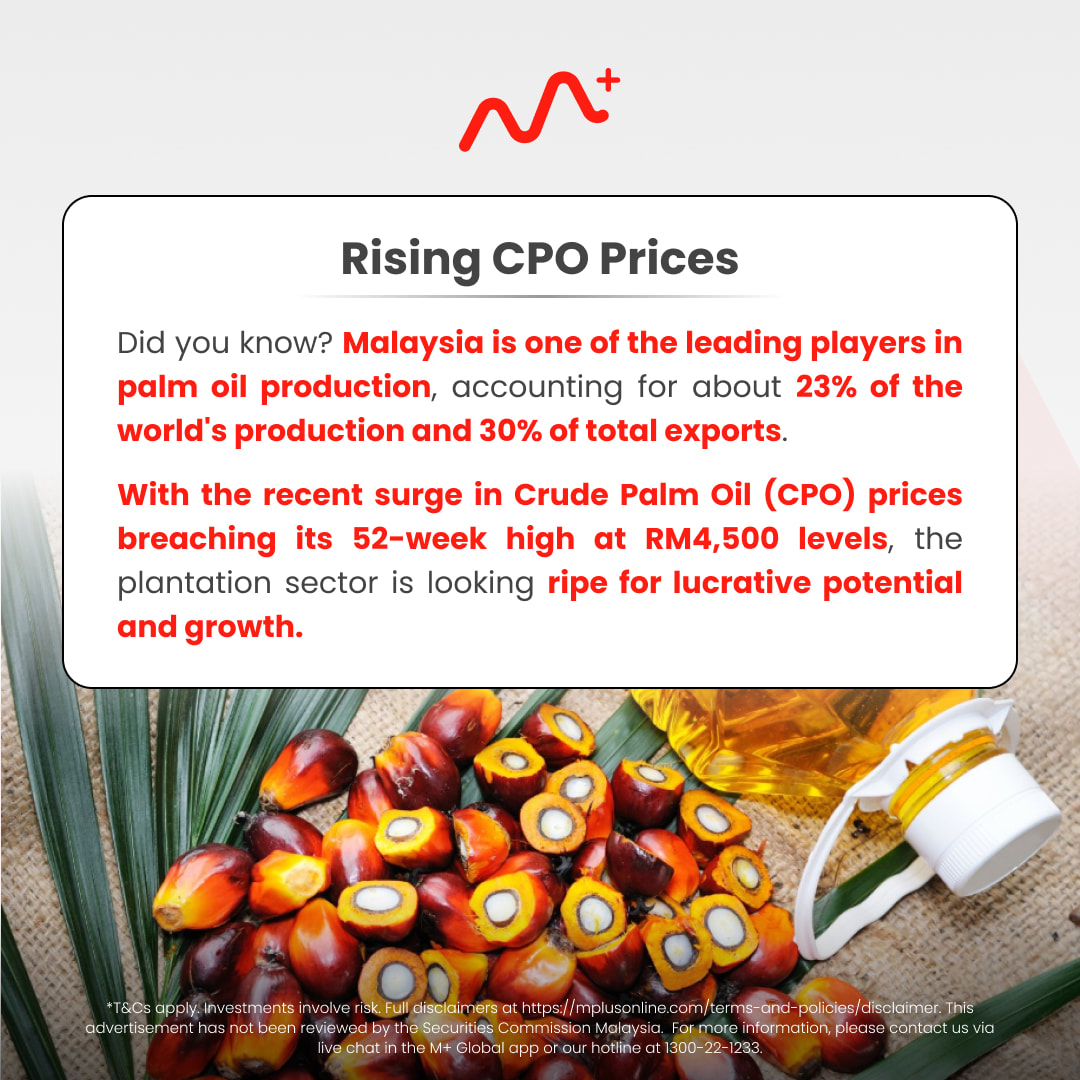
With Crude Palm Oil (CPO) prices surging to a 52-week high of RM4,500, Malaysian plantation stocks are catching investors’ attention. Palm oil remains one of the world’s most versatile and in-demand commodities, essential across industries such as food, cosmetics, and biofuels. Here’s why this rise in CPO prices is crucial for investors and which stocks stand out in this growth landscape.

Why Are Palm Oil Prices Rising?
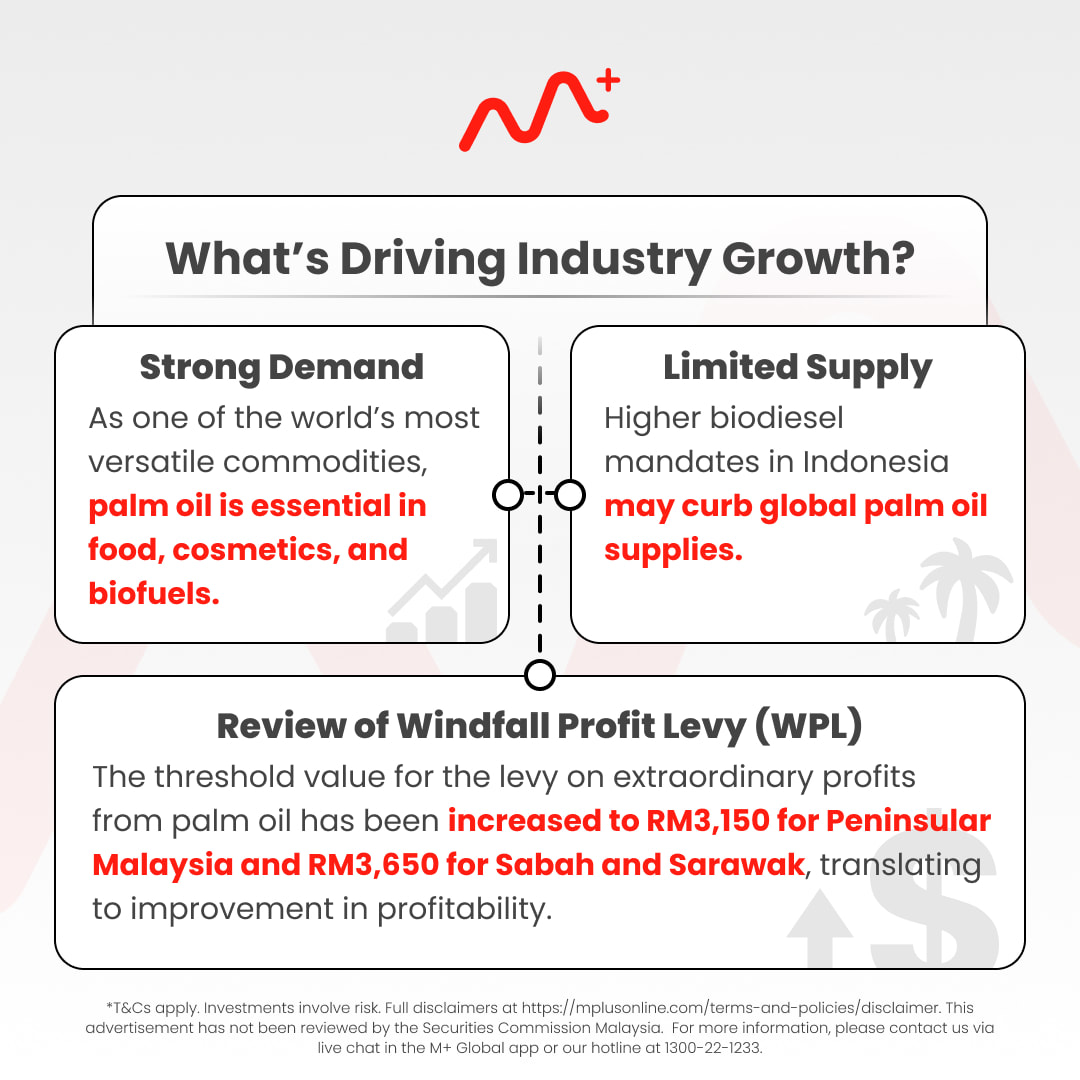
- Global Demand: Palm oil’s versatility drives robust global demand, as it’s widely used in food products, skincare, and energy production.
- Supply Constraints: Indonesia’s policies mandating higher biodiesel content are reducing palm oil availability, pushing prices higher due to a tighter supply.
- Policy Changes Favoring Profitability: The Malaysian government recently updated the Windfall Profit Levy (WPL), raising the profit thresholds for Peninsular Malaysia and East Malaysia. This change translates into better profit margins for plantation companies, making them more attractive to investors.
How Do Higher CPO Prices Impact Plantation Stocks?
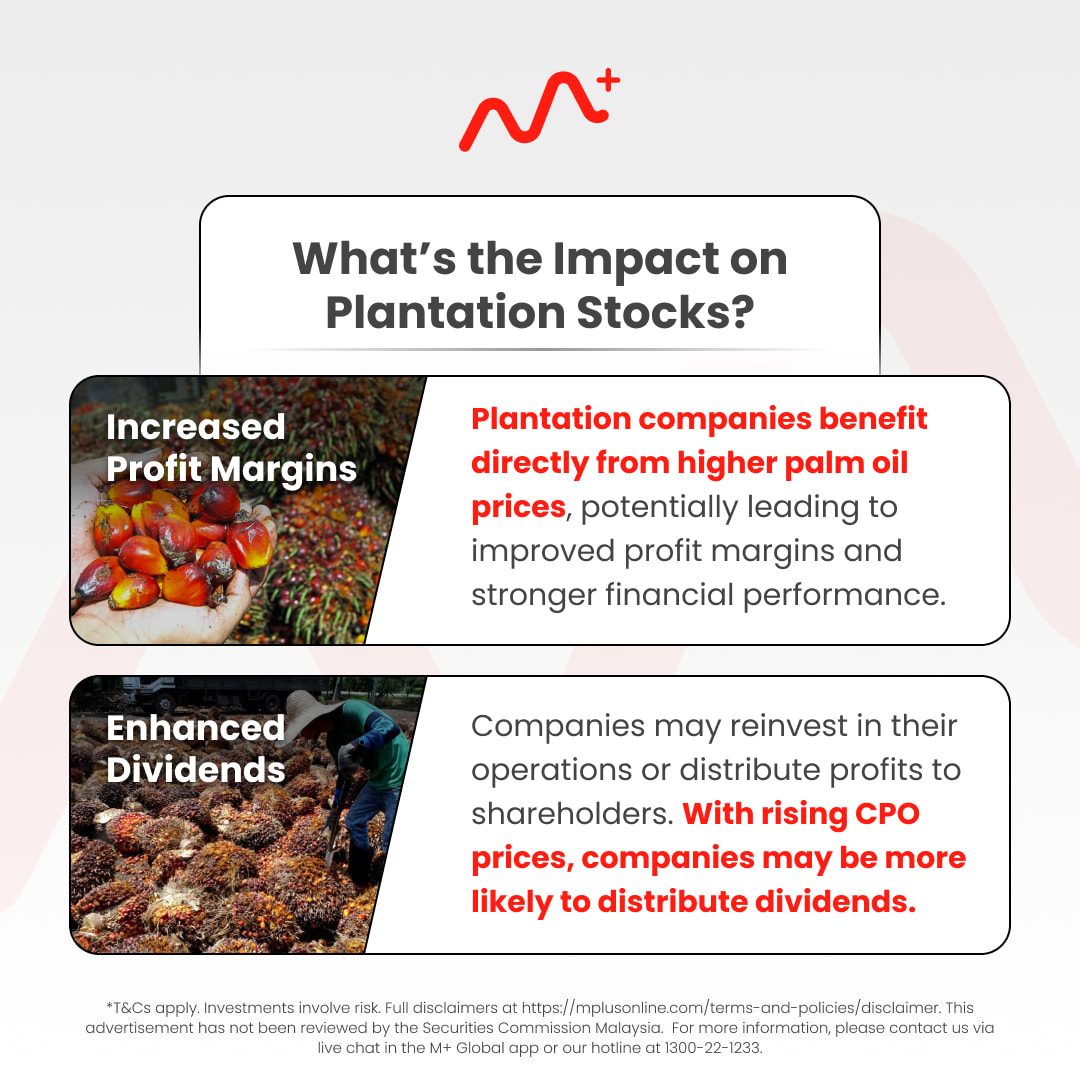
- Increased Profit Margins: Plantation companies can benefit directly from higher CPO prices, which improves profit margins and strengthens overall financial performance. This environment makes plantation stocks a promising option for growth-focused investors.
- Potential for Enhanced Dividends: With stronger earnings, many plantation companies may either reinvest in their operations or increase dividend payouts. Rising CPO prices mean these companies have more leeway to reward shareholders, appealing to dividend investors.
  |
  |
Key Drivers of Growth in Malaysia’s Palm Oil Industry
Several factors are contributing to a favorable outlook for Malaysia’s palm oil industry:
- Strong Global Demand: The essential role of palm oil in consumer goods and biofuels supports steady demand.
- Limited Global Supply: As Indonesia restricts exports to meet its domestic biodiesel goals, the global supply of palm oil tightens, supporting higher prices.
- Windfall Profit Levy Review: Malaysia’s new WPL thresholds allow plantation companies to retain more profits, positively impacting their bottom lines.
Conclusion: The Case for Malaysian Plantation Stocks
In summary, the current rise in CPO prices, combined with industry-specific growth drivers, creates an attractive environment for plantation stocks. Companies like Jaya Tiasa and Kim Loong offer solid upside potential through both price appreciation and dividends, appealing to investors looking for growth and income.
Investors interested in the palm oil industry should consider adding these plantation stocks to their portfolio as Malaysia continues to solidify its position as a leader in palm oil production. The sector’s robust outlook, coupled with favorable policies, makes plantation stocks a potentially rewarding choice for the foreseeable future.
Have you ready to hop on board with these stocks?
1. Download M+ Global now
2. Sign up Using Phone Number
3. Insert Invitation Code: UBZQ
4. Enjoy my professional services