SpaceX IPO Sets Record at US$1.8 Trillion Valuation
SpaceX closed its IPO on June 12, 2026, raising US$75 billion—the largest capital raise in the company’s history and among the most significant IPOs globally. The company priced 555.6 million shares at US$135 per share, valuing the entire business at approximately US$1.8 trillion.
Elon Musk, SpaceX’s founder and majority shareholder, retains around 42% ownership post-IPO, maintaining significant control over the company’s strategic direction. This ownership structure mirrors other founder-led tech unicorns that have gone public in recent years, where founding teams maintain supermajority voting rights.
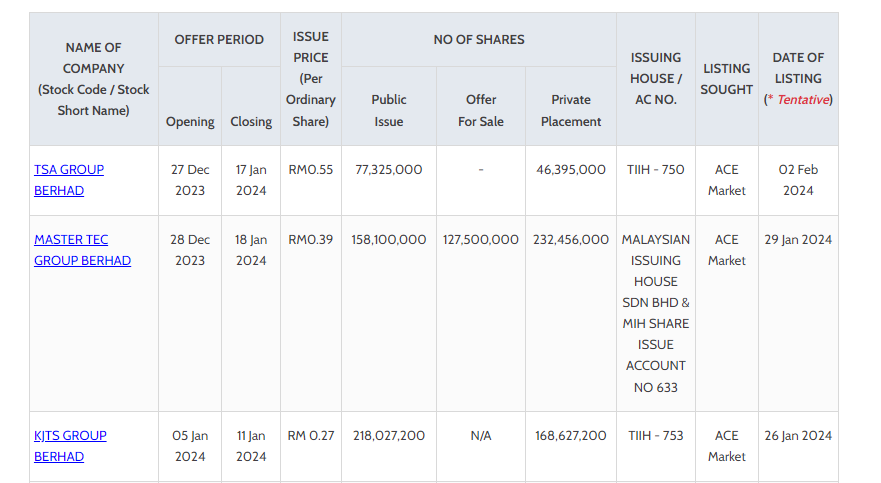
The scale of this IPO dwarfs recent Malaysian corporate listings. For context, the largest IPOs on Bursa Malaysia in 2025 raised between RM1.2 billion to RM3.5 billion—SpaceX’s US$75 billion raise is roughly 17 to 50 times larger in absolute terms, illustrating the vast capital pools available in US markets compared to regional exchanges.
Three Operating Segments Driving SpaceX’s Trillion-Dollar Valuation
SpaceX operates across three distinct business segments, each with vastly different revenue profiles and growth trajectories. Understanding these divisions is crucial for retail investors evaluating the company’s sustainability and risk exposure.
Space Segment: The Proven Cash Engine
The space segment remains SpaceX’s most mature and profitable division, built around its reusable rocket launching business. Over two decades, SpaceX has fundamentally transformed space transportation through engineering excellence and ruthless cost-cutting, displacing established incumbents like Boeing to become the dominant launch provider for both the US Pentagon and NASA.
This segment boasts the strongest unit economics within SpaceX, posting gross margins of 55% as of Q1 2026. For context, Malaysian telecommunications and manufacturing companies typically operate at 40-50% gross margins, making SpaceX’s space division remarkably capital-efficient even by developed-market standards.
SpaceX remains in a league of its own on cost efficiency, reusability, and launch frequency compared to competitors. Industry peers including Rocket Lab, Blue Origin, and United Launch Alliance trail significantly behind on all three metrics, giving SpaceX a near-monopolistic competitive moat in commercial and government space launches.
Connectivity Segment: Starlink’s Global Ambitions
Starlink, SpaceX’s satellite broadband network, is currently the world’s largest constellation of operational satellites. With approximately 9,600 operational satellites in orbit, Starlink accounts for around three-quarters of all active manoeuvrable satellites globally—a staggering market concentration.
This is SpaceX’s only profit-generating segment today, providing steady revenue from consumer subscriptions, enterprise contracts, and government partnerships. In markets like Malaysia, where rural broadband penetration remains below 60%, Starlink represents a potential competitive threat to terrestrial broadband providers like Maxis, Celcom, and Unifi, though regulatory hurdles and local partnerships will likely limit direct competition.
AI Segment: The Valuation Story
The AI segment warrants the greatest scrutiny from investors, as it carries most of the weight of SpaceX’s lofty US$1.8 trillion valuation. Formed around SpaceX’s xAI acquisition earlier in 2026, this division encompasses compute infrastructure initiatives, advanced AI models, and the social networking platform X (formerly Twitter).
The segment houses SpaceX’s Colossus and Colossus II 1GW training clusters, alongside the newly announced Terafab foundry—infrastructure designed to compete with Nvidia’s GPU dominance in AI training. Internally, SpaceX projects this segment’s total addressable market at approximately US$26.5 trillion, a figure equivalent to roughly one-quarter of global GDP at 2025 levels.
This AI valuation is speculative by nature. It relies heavily on narrative and future potential rather than demonstrated cash flows—a pattern Malaysian investors should recognize from the 2021 tech bubble, when Malaysian AI and e-commerce stocks traded at 8-12x revenue multiples before correcting sharply.
What Does This Mean for Malaysian Investors?
SpaceX’s record IPO highlights a structural advantage of US capital markets: their ability to monetize innovation by translating technological possibility into narrative, then narrative into capital. This is a defining feature that allows US tech companies to fund long-term R&D at scales unavailable to Malaysian firms.
Malaysian retail investors increasingly access US IPOs through offshore brokers and RM-hedged investment accounts. Those holding trading accounts with access to US equities should monitor SpaceX alongside other mega-cap tech plays like Tesla, Nvidia, and Meta for sector rotation signals.
The valuation premium assigned to AI infrastructure and compute—a core element of SpaceX’s AI segment—reflects broader investor appetite for artificial intelligence exposure. Malaysian tech stocks like Pentamaster, VS Industry, and Vitrox operating in semiconductor and automation space may attract increased scrutiny as regional investors seek local alternatives to expensive US AI plays.
SpaceX’s gross margin of 55% in its space division also sets a benchmark. Malaysian aerospace and technology contract manufacturers typically operate at 12-25% gross margins, highlighting why US-listed tech companies command premium valuations—they have fundamentally different business models with superior unit economics.
The Risk of Narrative-Driven Valuations
SpaceX’s prospectus promises investors “extending the light of consciousness to the stars” and sparing humanity from “the same fate as dinosaurs.” While compelling storytelling, this illustrates a key risk: much of SpaceX’s US$1.8 trillion valuation rests on future narratives rather than current earnings.
The AI segment’s projected US$26.5 trillion TAM is theoretical. Regulatory uncertainty around AI governance in the US and EU, competition from established tech giants, and execution risks on Terafab all pose material downside risks. Malaysian investors exposed to growth narratives through local tech stocks should apply similar scrutiny to earnings visibility and competitive positioning.
Elon Musk’s dual role as SpaceX CEO and owner of X (now part of SpaceX’s AI segment) creates potential conflicts of interest. X’s platform is used for corporate communications and market-moving announcements—a dynamic that Malaysia’s Securities Commission has not yet had to regulate directly but warrants monitoring.
Malaysian Context: EPF and Regional ETF Exposure
Malaysia’s Employees Provident Fund (EPF) holds significant allocations to global tech indices and US equity funds. While SpaceX trades privately held, EPF’s underlying holdings in S&P 500 and Nasdaq-100 trackers will gain indirect exposure to SpaceX’s ecosystem partners (semiconductor suppliers, data center operators, cloud infrastructure providers).
Retail investors with EPF investment accounts or ASB allocations should review their US tech exposure. If technology already represents 35-40% of your international equity allocation, SpaceX’s record IPO may signal peak valuation conditions in the US tech sector—a time when rebalancing into undervalued sectors like commodities, energy, or emerging market financials becomes prudent.
Regional ETF providers in Malaysia tracking US tech indices—such as iShares US Tech ETF, Vanguard Tech ETF, and local TM Growth Fund—may see increased inflows as retail investors chase SpaceX’s narrative. Consider whether you’re investing in the technology itself or the hype cycle.
Key Takeaways for Your Portfolio
- SpaceX raised US$75 billion at US$1.8 trillion valuation on June 12, 2026—the largest IPO globally in recent years, with 555.6 million shares priced at US$135 each.
- Space segment shows proven economics with 55% gross margins, while AI and connectivity segments carry higher risk and speculative valuation premiums typical of early-stage narratives.
- Narrative-driven valuations are cyclical—Malaysian investors should compare SpaceX’s TAM projections to actual revenue visibility and execution before increasing US tech exposure.
- EPF and offshore account holders gain indirect SpaceX exposure through S&P 500 and Nasdaq-100 index investments; review your tech sector concentration.
- Monitor Malaysian semiconductor and aerospace stocks for potential outperformance as regional investors seek alternatives to expensive US growth narratives.
Bottom Line: Worth Monitoring, Not Chasing
SpaceX’s record IPO represents a genuine inflection point in space technology commercialization. The space segment’s 55% gross margins and market dominance are authentic. However, the US$1.8 trillion valuation is built significantly on the AI segment’s unproven US$26.5 trillion TAM—a figure that assumes perfect execution, minimal regulatory friction, and sustained competitive advantage.
For Malaysian retail investors, the key lesson is recognizing how US capital markets price innovation premiums that regional markets cannot match. Rather than chasing SpaceX, consider whether your existing tech allocations (through AI stock analysis and ETF holdings) already overweight these narratives. If you’re interested in space tech exposure, monitor publicly traded aerospace suppliers and satellite operators instead of waiting for regional IPOs in this space.
Always conduct your own due diligence and consult a licensed financial advisor before making investment decisions. Valuation metrics can shift rapidly when market sentiment changes, particularly in narrative-heavy sectors like space technology and artificial intelligence.
Source: View Original Article — The content is based on the original publisher. Refer to the original content for accurate info. Contact us for any changes.
New to IPOs? Read our step-by-step guide on how to apply for an IPO in Malaysia, and check the Malaysia IPO 2026 list for upcoming listings.
📊 On AI Stock Terminal: Malaysia IPO calendar
Related Resources from Dexter Chia
Disclaimer: This article is for informational purposes only and does not constitute financial advice. Always do your own research before making investment decisions.
Want to invest in Bursa Malaysia or US markets? Contact Dexter Chia, an AI Driven Remisier who has 2,200+ clients at Malacca Securities Sdn Bhd (M+ Global). M+ Global Invitation Code: UBZQ | WhatsApp: +60169059789 | Why Choose Dexter?