LEAP Market 2.0 — What’s Changing for Retail Investors?
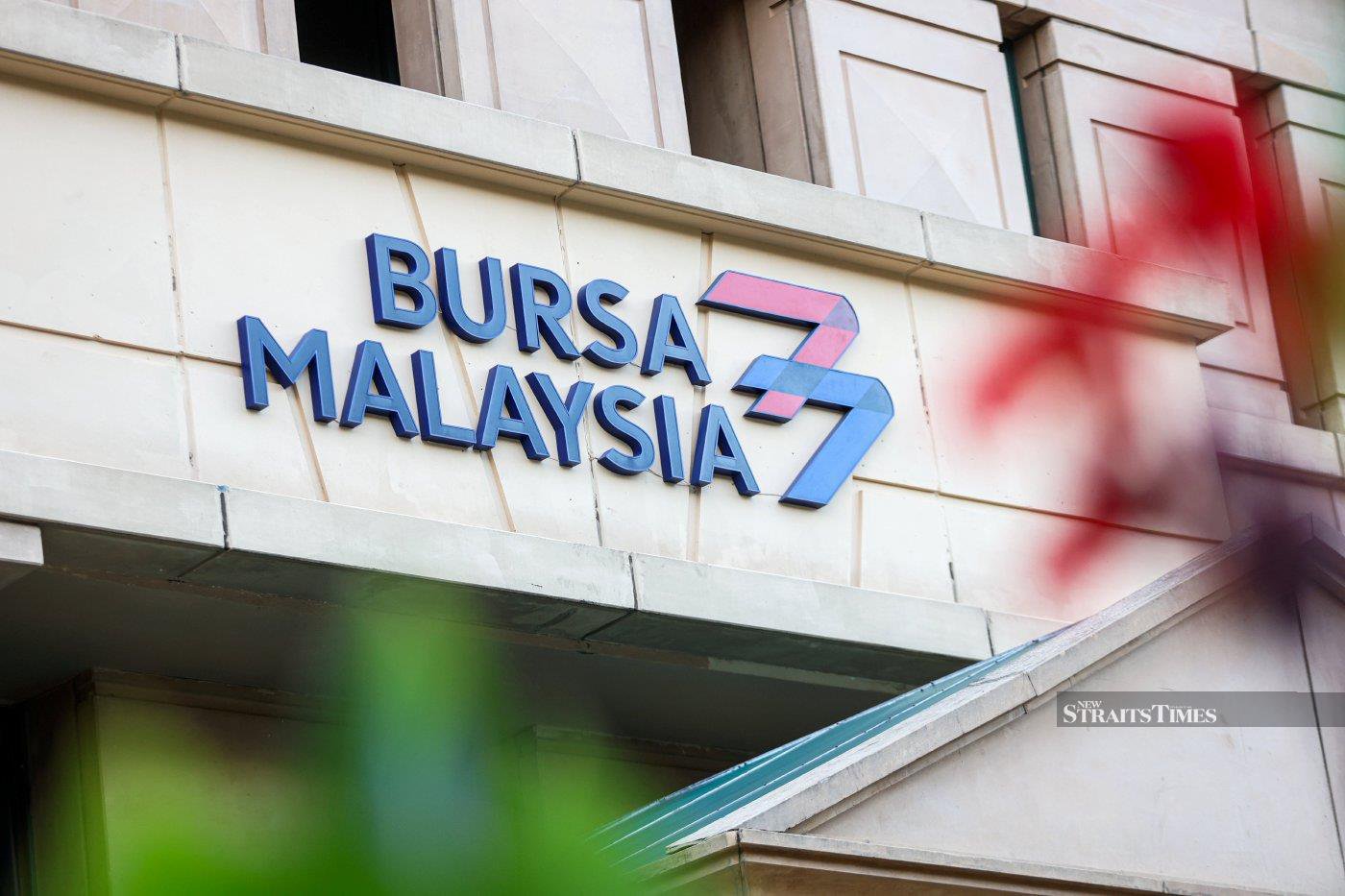
Since its launch in 2017, the LEAP Market has been exclusively for sophisticated investors — until now. The Securities Commission (SC) and Bursa Malaysia jointly announced on May 18 a major overhaul called LEAP Market 2.0, which will allow retail investors to participate for the first time under strictly defined limits.
The headline change: retail investors can now invest up to RM250,000 total across the LEAP Market, subject to individual caps of RM100,000 per issuer in the primary market and RM100,000 per broker in the secondary market. This triple-layer protection structure signals the SC’s cautious approach to opening the platform while managing retail investor risk.
SC chairman Datuk Mohammad Faiz Azmi framed the proposal as part of Malaysia’s “funding escalator” — a pathway designed to move companies from early-stage fundraising through to full main market listings. Malaysia has approximately 8,500 mid-tier companies (MTCs) eligible for capital market fundraising, representing untapped growth potential for both issuers and investors.
The timing matters. As of May 18, one ECF (equity crowdfunding) issuer has already transitioned to the LEAP Market, while 10 LEAP Market listed companies have graduated to the ACE Market — demonstrating real company progression. This track record supports the SC’s confidence in moving toward broader retail participation.
What Does This Mean for Bursa Malaysia Investors?
For retail investors holding accounts on Bursa Malaysia, LEAP Market 2.0 opens a new asset class previously off-limits. Early-stage and emerging companies typically offer higher growth potential than established blue-chips, but with correspondingly higher volatility and risk. The RM250,000 cap ensures no single investor can overexpose themselves to this riskier segment.
The secondary market RM100,000 per broker cap is particularly significant. It means investors can’t concentrate their LEAP Market holdings with a single trading account, forcing diversification across brokers if they want maximum exposure. This structural limit reduces counterparty risk and encourages prudent broker selection.
Bursa Malaysia CEO Datuk Fad’l Mohamed emphasized that the enhancements introduce “greater flexibility in admission pathways and broader investor participation, while reinforcing market depth and transparency.” In practical terms: more investors + more companies = tighter bid-ask spreads and better liquidity, particularly in the secondary market where small-cap stocks often struggle for trading volume.
MSMEs and mid-tier companies gain the most immediate benefit. Instead of jumping straight to the main market (which carries higher listing costs and stricter requirements), they can now test capital markets on the LEAP platform with retail backing. This two-step approach reduces barriers to entry and likely means more IPO candidates in future years.
How Will LEAP Market 2.0 Strengthen Malaysia’s Capital Markets?
The SC’s proposal directly addresses Malaysia’s “funding escalator” challenge — the visible gap between angel/early-stage funding and full main market listings. With 8,500 mid-tier companies currently outside Malaysia’s listed universe, the potential pipeline is massive.
Consider the proof-of-concept metrics. One ECF issuer graduating to LEAP, then 10 LEAP companies moving to ACE — this shows the system works. Retail participation should accelerate this pipeline, as broader investor interest attracts more quality issuers to list on LEAP first rather than seeking private capital indefinitely.
The regulatory framework behind LEAP Market 2.0 suggests the SC learned from earlier retail platform growing pains. The investment caps and per-broker limits are conservative but not prohibitive. A sophisticated retail investor with 10 different brokers could theoretically reach the RM250,000 limit (RM100k × 2 brokers + RM50k with a third), demonstrating the ceiling is real but not unreasonably tight.
Market depth improves for existing LEAP-listed companies. More retail order flow means better execution for all participants, not just institutions. Smaller companies benefit from faster capital deployment and genuine price discovery rather than opaque institutional negotiations.
Key Timeline and Next Steps
The SC and Bursa Malaysia issued a public consultation paper on May 18, 2024, seeking feedback on proposed amendments. The consultation period closes on June 15, 2024 — giving stakeholders exactly four weeks to submit responses, identify issues, and propose refinements.
What comes next depends on consultation feedback. The SC has shown flexibility in past market reforms, sometimes extending timelines or adjusting caps based on industry input. No official launch date has been announced yet, but post-June 15 analysis suggests a possible Q3 2024 rollout, though this remains speculative.
Retail investors should monitor official Bursa Malaysia announcements closely. Once LEAP Market 2.0 is approved, your existing trading account may need no changes — but your broker’s platform will need to add LEAP Market order capabilities. Check whether your current broker (RHB Investment Bank, Maybank Investment Bank, etc.) has confirmed LEAP Market retail access plans.
What Should Retail Investors Watch?
1. Current LEAP Market Listings — If you’re considering early exposure, research the 30-40 companies currently listed on LEAP (exact count varies). These firms operated under sophisticated-investor-only rules until now, so public information may be sparse compared to main market stocks. Do thorough diligence before June 15 passes.
2. Your Broker’s Readiness — Contact your remisier or online broker now to ask: “Will you support LEAP Market retail trading once LEAP 2.0 launches?” Some brokers may delay implementation or charge higher fees for this new segment. Early conversations help you plan account strategy.
3. Sector Composition — Watch which industries dominate LEAP Market listings post-approval. Tech startups, fintech, biotech, and e-commerce likely feature heavily. Understanding the sector concentration helps you avoid over-exposure to trend cycles.
4. Graduation Pace — Monitor how many LEAP Market companies move to ACE Market or main market over the next 12-24 months. A high graduation rate (like the current 10 companies moving to ACE) validates the LEAP Market as a genuine stepping stone, not a graveyard for failed IPO candidates.
Risk Factors Retail Investors Must Consider
Early-stage companies carry higher liquidity risk. Unlike main market stocks traded by institutions and retail en masse, LEAP Market shares can gap between trades. The RM100,000 per broker cap partly mitigates this, but large position exits may face slippage.
Volatility is expected to run 2-3x higher than FBM KLCI components. A 15-20% intraday swing on a small-cap LEAP stock is normal, while the same move on Maybank (ticker: 1155) would dominate market headlines. Your risk tolerance must align with this reality.
Information asymmetry remains real. While the SC requires transparency, LEAP-listed companies are newer with shorter track records. Quarterly earnings surprises (up or down) can trigger sharper repricing than established blue-chips experience. Research thoroughly before committing capital.
The RM250,000 cap exists precisely because retail investors historically struggle with concentration risk in small-cap names. Respect this limit as guidance, not a floor.
How This Compares to ECF and Current Market Structure
Malaysia’s funding escalator currently includes: equity crowdfunding (ECF) for pre-revenue startups, followed by LEAP Market for early-revenue growth companies, then ACE Market for established mid-caps, and finally the main market for large-caps. LEAP Market 2.0 fills the critical gap between ECF and institutional capital.
ECF deals typically involve RM1-10 million raise from crowd investors via licensed platforms. LEAP Market companies are further along, raising larger amounts with more institutional backing. Opening LEAP to retail investors aligns both segments under one retail-accessible ecosystem.
The main market remains closed to stage-zero startups — rightfully so. LEAP Market 2.0 creates a rational progression pathway that should reduce main market reliance on mature, slow-growth candidates and open space for fresh growth companies entering the bourse.
- RM250,000 investment cap — Retail investors can now access LEAP Market, limited to RM250k total (RM100k per issuer primary, RM100k per broker secondary)
- Two-step graduation pathway — Proves effective with 1 ECF → LEAP transition and 10 LEAP → ACE Market moves already completed
- 8,500 eligible mid-tier companies — Massive untapped pipeline of MSMEs and MTCs seeking listed capital
- Consultation closes June 15, 2024 — Feedback period is critical; no official launch date confirmed yet
- Broker readiness varies — Confirm your current trading platform will support LEAP Market retail orders post-approval
Bottom Line for Your Bursa Malaysia Portfolio
The LEAP Market 2.0 proposal represents meaningful structural progress for Malaysia’s capital markets. Opening early-stage growth opportunities to retail investors aligns with global best practice (Singapore’s Catalist, for example, serves a similar function). The investment caps and phased approach suggest the SC learned from previous retail platform challenges.
For retail investors, this is worth monitoring closely — but not rushing into. Wait for official approval, research available LEAP companies thoroughly, confirm your broker’s support, and start with small positions if you decide to participate. The RM250,000 cap and RM100,000-per-broker limit exist for good reason: early-stage investing requires discipline.
Consider pairing AI Stock Analysis for Malaysians tools with manual due diligence — LEAP Market companies may have less analyst coverage, so combining data-driven screening with fundamental research is essential. If you’re exploring trading strategies more broadly, review your Trading Account Types in Malaysia to ensure your current setup can support LEAP participation.
The proposal consultation period closes June 15. Beyond that date, amendments likely follow, and retail LEAP Market access inches closer to reality. Investors who position themselves early — by studying existing LEAP companies, evaluating broker offerings, and stress-testing their risk tolerance — will be best prepared when LEAP Market 2.0 officially launches.
Disclaimer: This article is for informational purposes only and does not constitute financial advice. Past performance and regulatory timelines are not guarantees of future outcomes. Retail investors should conduct their own due diligence and consult licensed financial advisors before investing in early-stage securities. All figures and statements reflect information available as of May 18, 2024.
Source: View Original Article — The content is based on the original publisher. Refer to the original content for accurate info. Contact us for any changes.
Related Resources from Dexter Chia
Disclaimer: This article is for informational purposes only and does not constitute financial advice. Always do your own research before making investment decisions.
Want to invest in Bursa Malaysia or US markets? Contact Dexter Chia, an AI Driven Remisier who has 2,200+ clients at Malacca Securities Sdn Bhd (M+ Online / M+ Global). M+ Global Invitation Code: UBZQ | WhatsApp: +60169059789 | Why Choose Dexter?